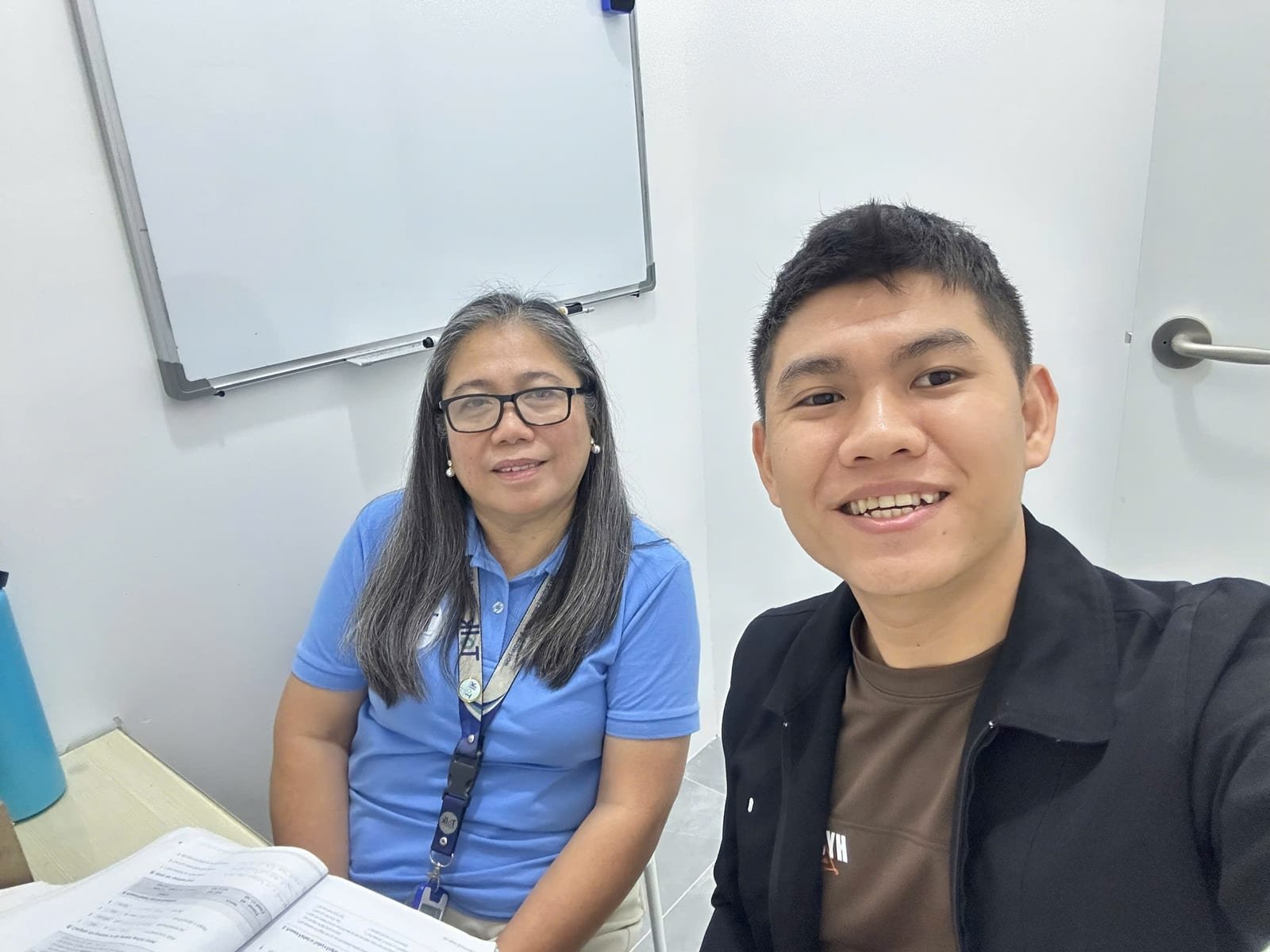
Teachers who listen to how you want to learn
When people compare schools they look at lesson counts and materials. Le Dinh Dat — TALK6 Hybrid A, a twelve-week course, currently in week three — led with something no brochure prints: whether the teacher listens to how you want to learn.
"The teachers are flexible and they listen"
"The teachers are quite flexible and they listen to how a student wants to learn."
This is the line a course sheet cannot prove. With the same materials, a one-to-one lesson can lean into grammar, into pronunciation, or into simply keeping you talking — and the person who decides that is the teacher sitting across from you.
In a one-to-one lesson that adjustment needs nobody's approval: you say it, and the next lesson runs differently. That, more than the number of lessons a day, is what the format is actually worth.
Reflexes, not scores
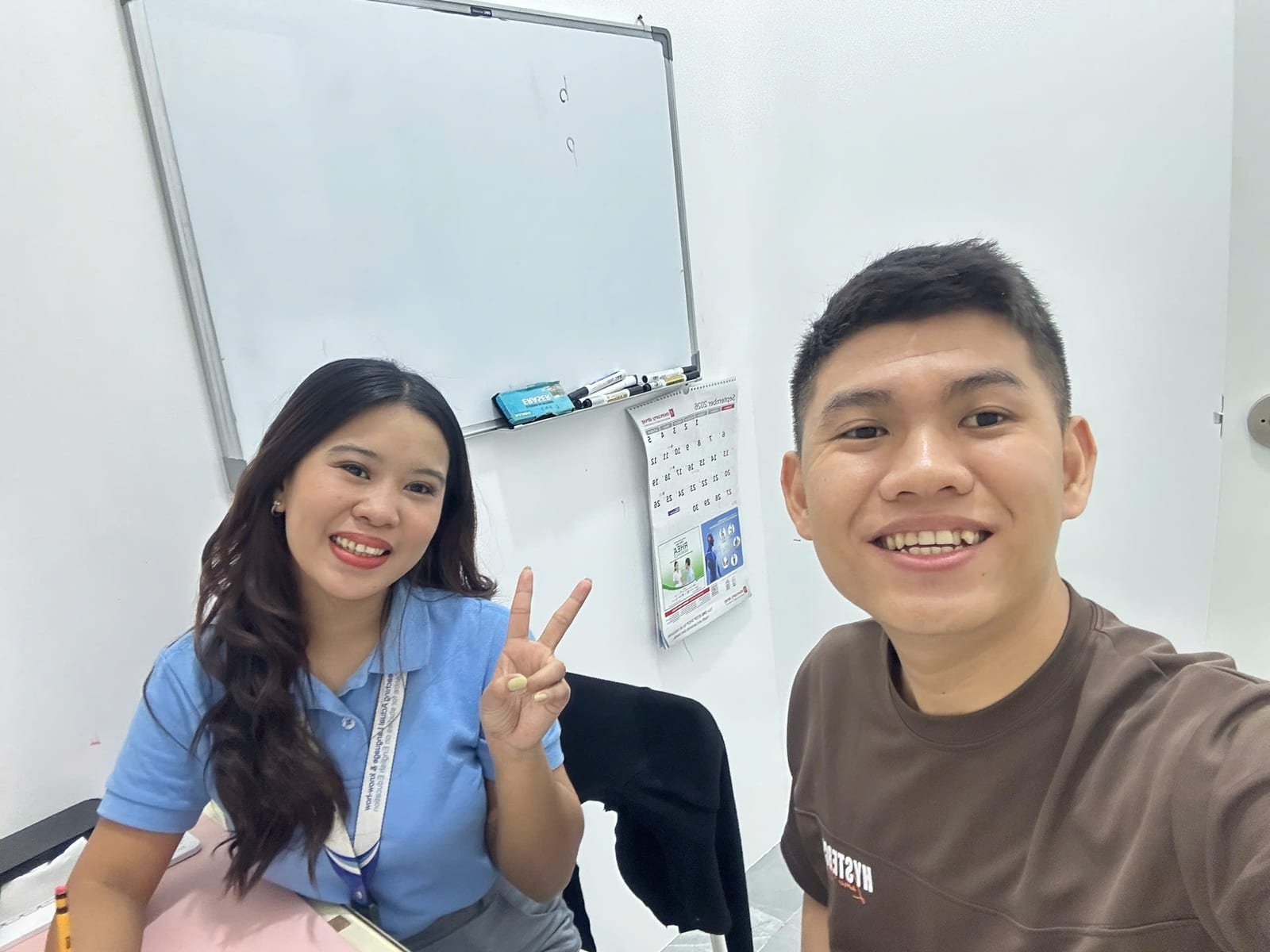
"I made friends with students from several countries, so I used English far more often and my reflexes in conversation improved."
The word worth noticing is reflexes. Understanding a sentence and answering it in time are two different abilities, and the second only grows when you are forced to react many times a day. A classmate from another country does that for you; a textbook cannot.


The new 4-person room — and the noise
"I am in a 4-person room. It is new and well equipped, and it meets my needs. However, there is construction upstairs, so sometimes there is noise."
We have left that sentence as he wrote it. The 4-person rooms are a new dormitory area, and work upstairs is still going on, so there are times you hear it. That is the truth, and anyone weighing the school up should know it in advance.
"When small problems came up in daily life, the school took the feedback and dealt with it quite quickly, which made me feel looked after."
And this is why we did not delete the line above. No dormitory is free of problems; the difference is whether saying something gets it fixed. His compliment only means anything while his complaint is still standing next to it.

Food: vegetables daily, weekends on your own
"The food is good, easy to eat and varied, and there are green vegetables every day. One thing to note is that the school does not serve meals at weekends or on public holidays, so students need to prepare for that themselves."
That is right: three meals are served on weekdays, and none on Saturdays, Sundays or Philippine public holidays. Meal rules differ from school to school — confirm the details with your agency.

Who it suits
"Talk gave me a fairly comfortable environment to study and live in, and it suits people who want to improve their communication and have more experiences with international friends."
If you need a specific score in a short time, ask about the exam courses instead. But if what you want is to be able to speak — and to be able to say out loud how you want to be taught — this is that kind of place.
Interested in the course?
Enrolment, start dates and quotes for Talk Academy are handled by partner agencies in each country. Tell them your goal and how many weeks you have.