The English that happens after class
Once you have sat through six periods in a day, a seventh does not go in. You are full. And yet four weeks is short and English needs more hours than that. What fills the gap in between is, in practice, what decides whether a short course works.
Yi Chen Hsu, a Taiwanese student who started TALK4 Hybrid A in September, wrote that part down clearly.
First, the classroom
"They schedule one-to-one and group classes, so I had a lot of chances to practise English. The one-to-one lessons let me work on my own problems, like grammar, speaking and pronunciation; the group lessons taught me how to communicate with other students in English."
A TALK4 Hybrid day is four one-to-one periods plus two group periods. The two are not drilling the same thing. One-to-one repairs your own faults; group makes you carry a sentence to the end in front of other people. Take either away and you get stuck.
And then, after class
"The school also arranges after-class activities, like movie appreciation and K-pop dance, so I could use English in a relaxed atmosphere and got to know classmates from different countries."
That sentence is worth slowing down on. "Use English in a relaxed atmosphere" is really a line about managing intensity. While you are watching a film or copying a dance step, English is background rather than examination — so it still gets through. A seventh lesson cannot do that.
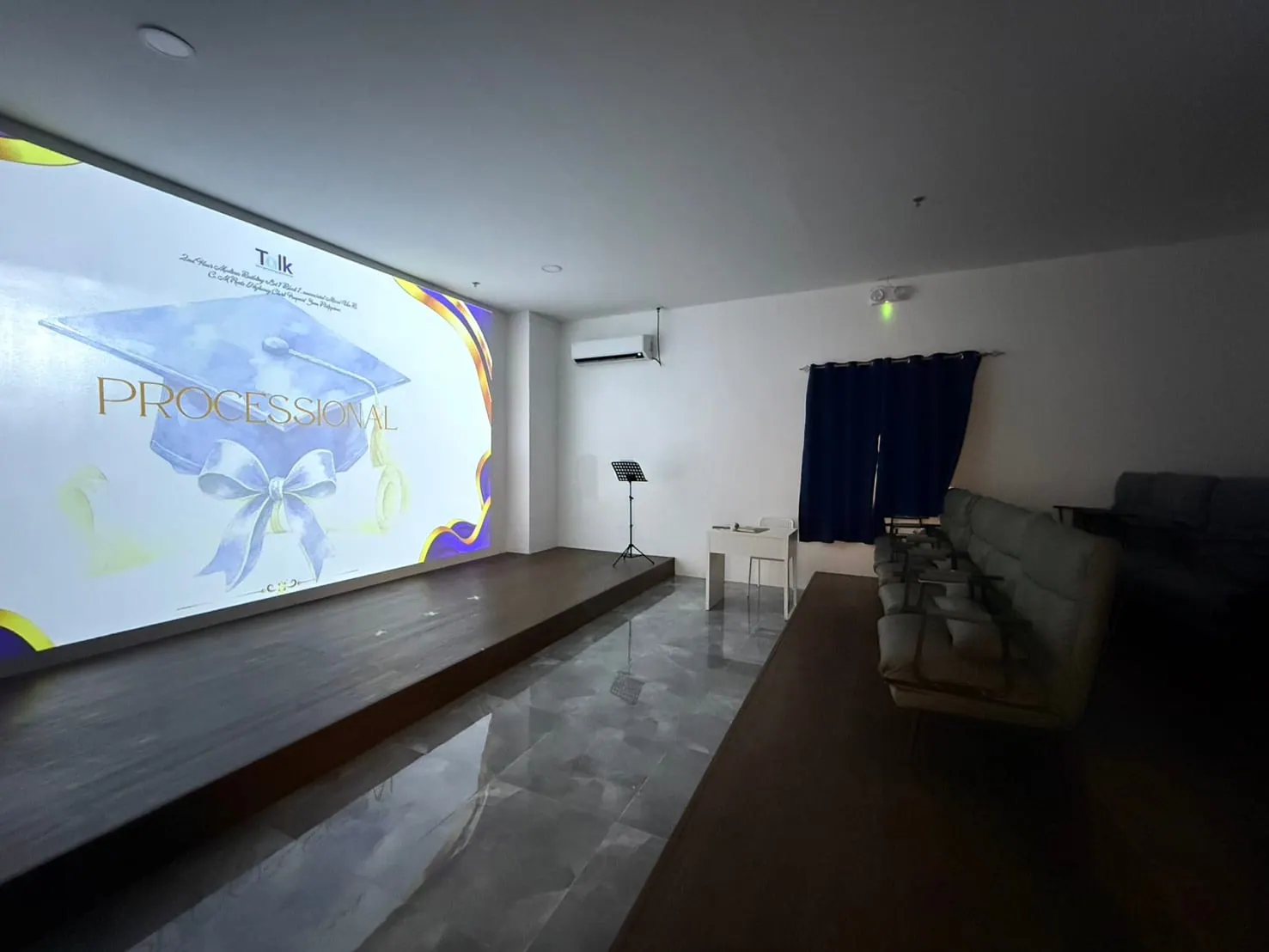
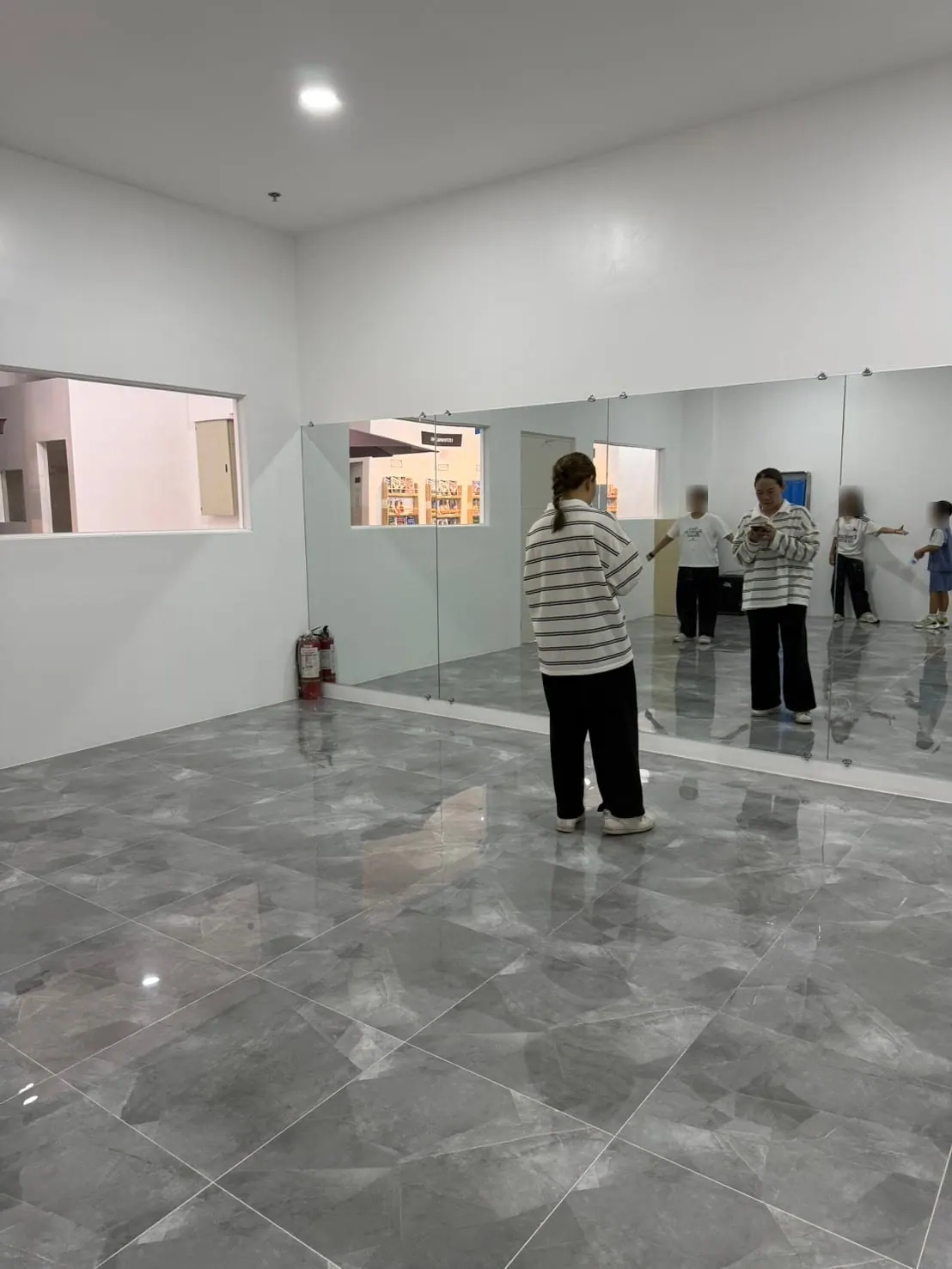
The other half of the value is in the second clause: "got to know classmates from different countries." Someone you have danced badly with will say hello to you in the canteen the next day. And that hello can only happen in English.
At the weekend she went riding
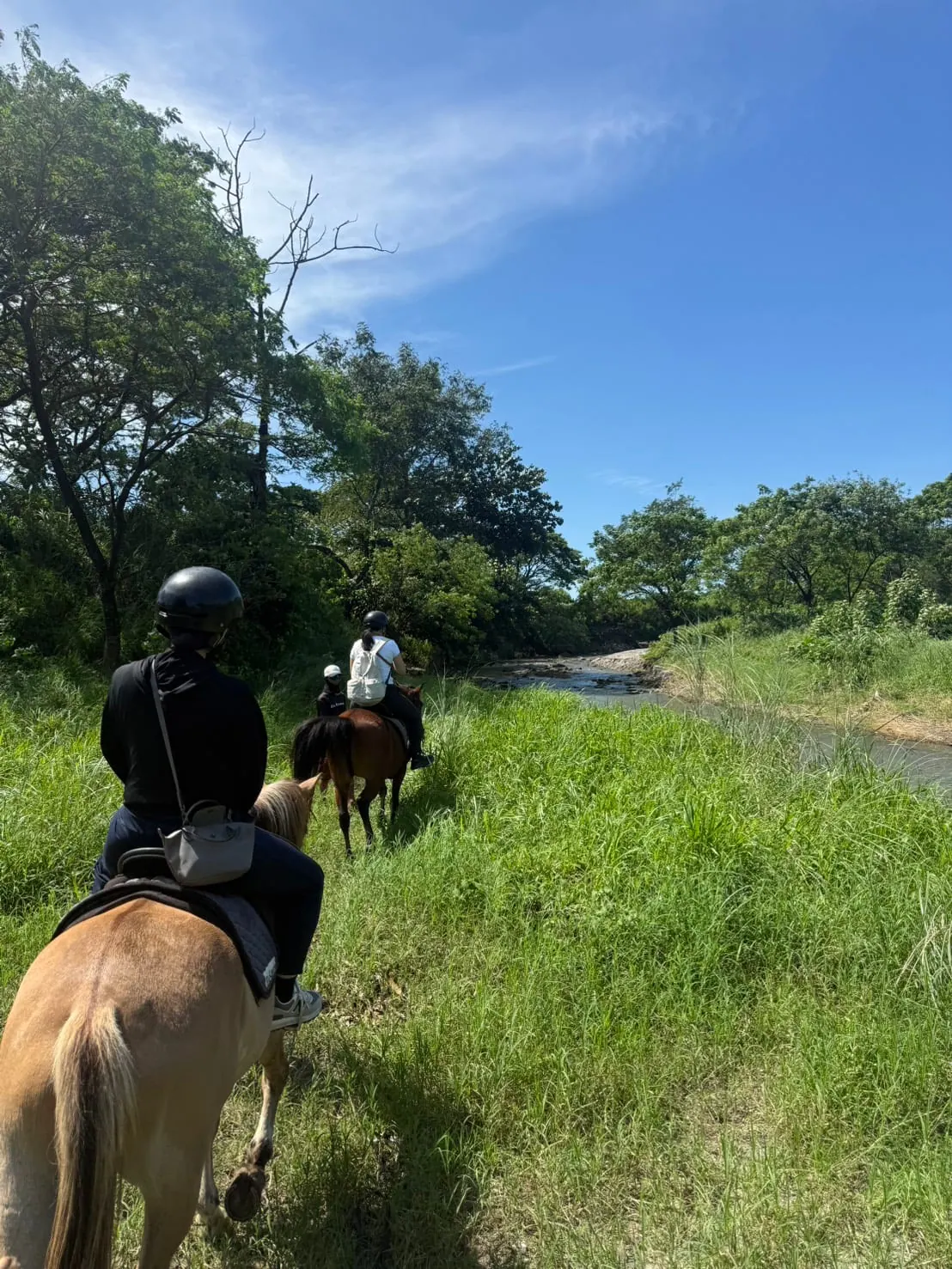
"I also joined a horse-riding activity outside the school and experienced a different kind of life."
One thing about Clark is consistently underrated: it is not a town of nothing but academies. The area was a US air base, and it kept the wide green space, the riding stables, the golf courses and the cycle roads — all a few tens of minutes from school.

After four weeks
"These four weeks were not only about learning English; they also increased my confidence in communicating with people. At first I was a bit nervous speaking English, but after practising every day I found I dared to speak more and more, and I could understand more English too."
Her phrase is "practising every day." The after-class activities, the meals, the conversations with classmates from other countries — all of that counts inside that "every day." Add those hours together and you have the practice her four weeks actually contained.
She wrote a separate piece about the living side:
If four weeks is all you have
When comparing schools, do not only count periods per day. Ask what there is after class. If that block is empty, it stays empty.
Want to know about the courses?
Enrolment, start dates and quotations for Talk Academy are handled by partner agencies in each country. Tell them your level honestly, and how many weeks you can take.