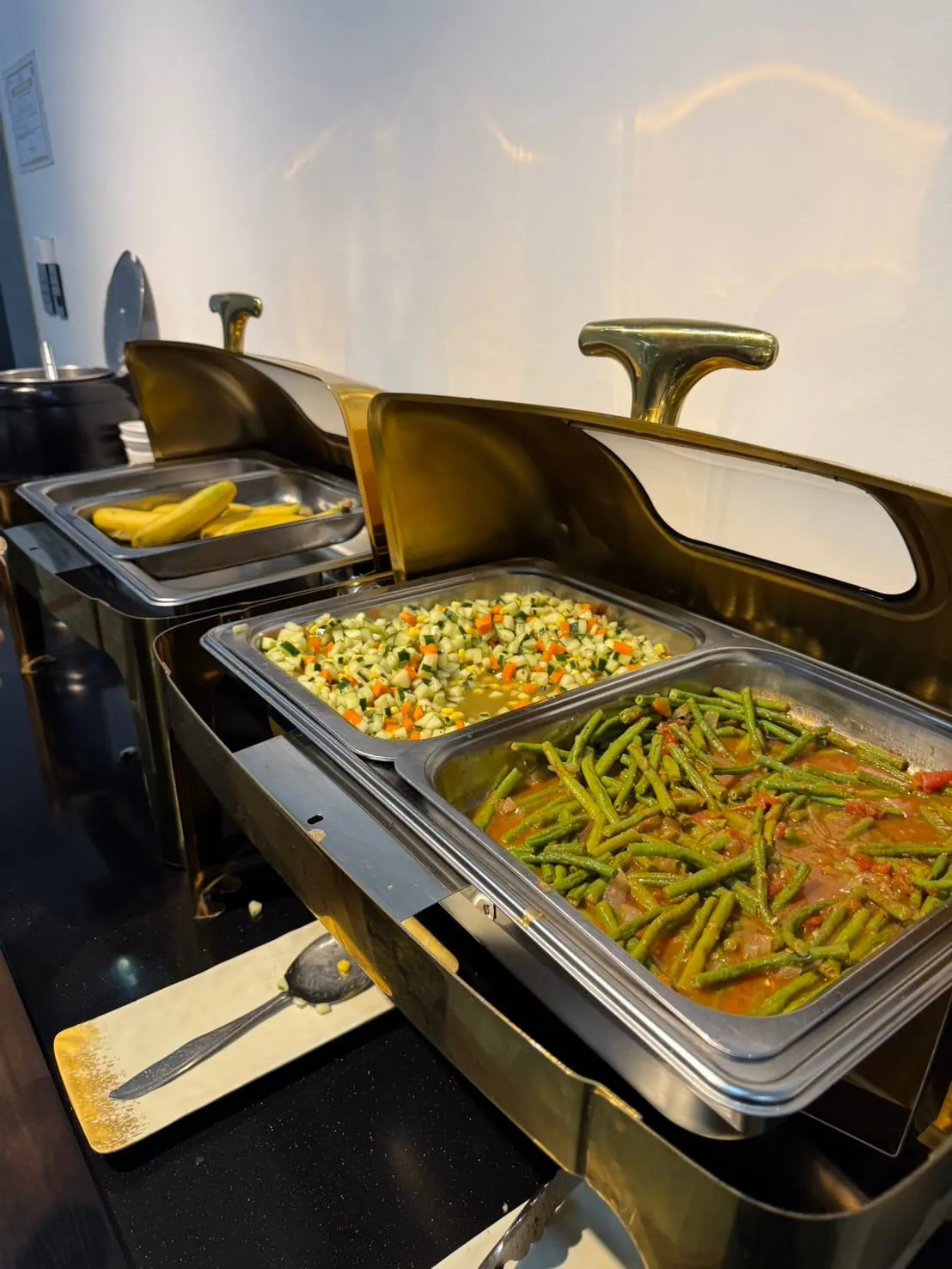
Meals, laundry, cleaning
When people compare schools they ask about periods per day, about the teachers, about how many people share a room. Almost nobody asks who does the laundry.
And yet, whether you stay four weeks or twelve, that quietly decides how much time is left for English. Yi Chen Hsu, a Taiwanese student who has just finished four weeks of TALK4 Hybrid A, wrote this part down.
Food first
"I think the meals the school provides are quite good. I could eat without worrying, and I had enough energy for the lessons every day."
"Eat without worrying" and "enough energy for the lessons" are the same story. Six periods a day is physical work. If lunch is a gamble, the afternoon class is only half there.
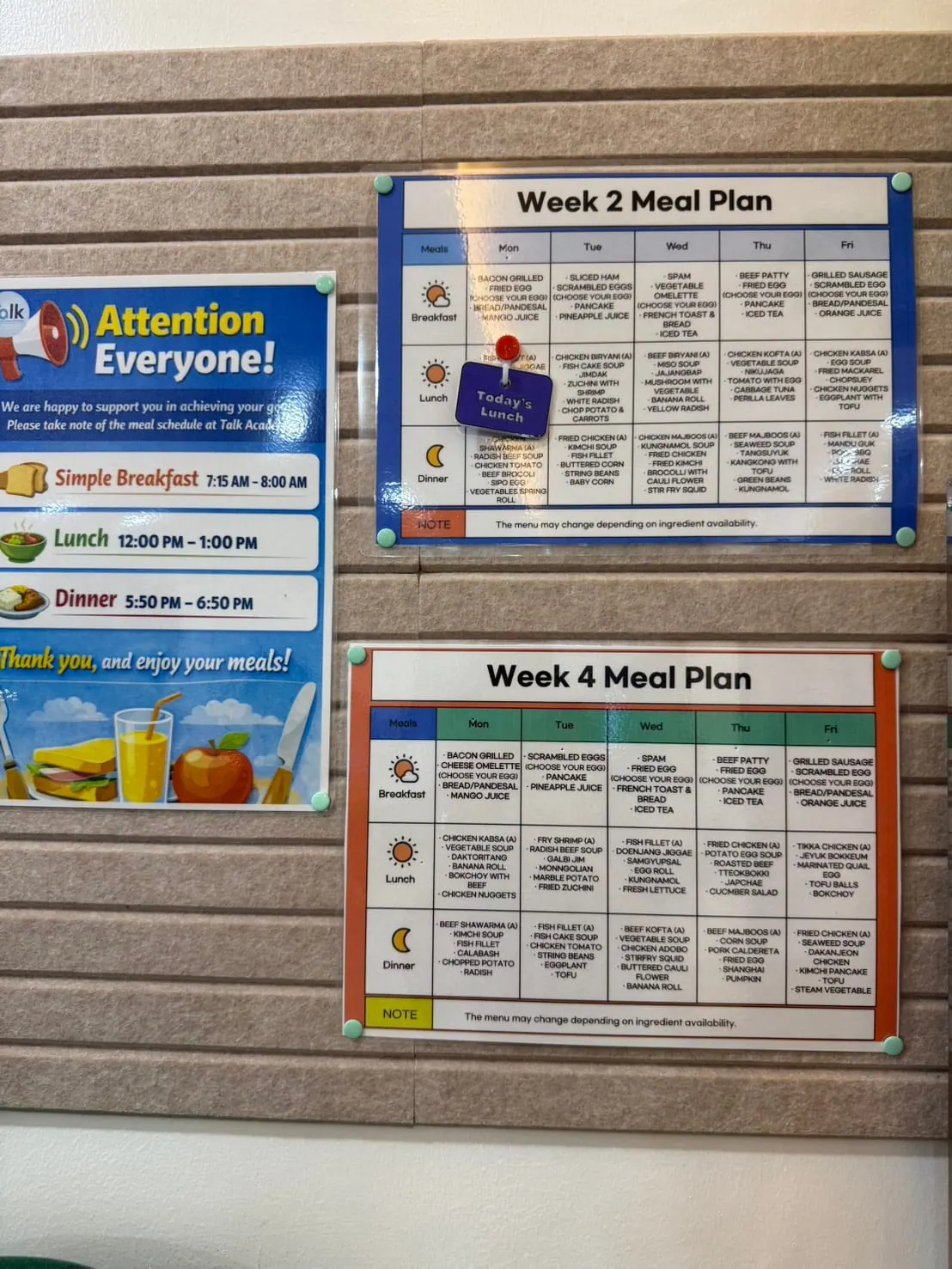
The canteen wall carries the week's menu, and the serving times are posted with it: breakfast 7:15–8:00, lunch 12:00–13:00, dinner 17:50–18:50 (served on weekdays). The menu rotates weekly, so four weeks does not mean eating the same plate over and over.
Laundry and cleaning, twice a week
"The school arranges laundry and room cleaning twice a week, which is very convenient for us. Because someone helps with the living side, I do not have to spend much time tidying my room or doing laundry, and I can put more energy into learning English."
This paragraph is worth doing the arithmetic on properly.
Compare it with a homestay or a rented room in an English-speaking country. Laundry, cleaning, shopping and cooking are all yours, and they take several hours a week — in the evening, which is exactly the block you meant to use for review. A dormitory school in the Philippines hands those hours back.
It is not a question of how nice the service is. It is a question of how much usable time your four weeks actually contain. The shorter the course, the more it shows: four weeks is only twenty class days, and every evening you save carries weight.
Who you go to when something breaks
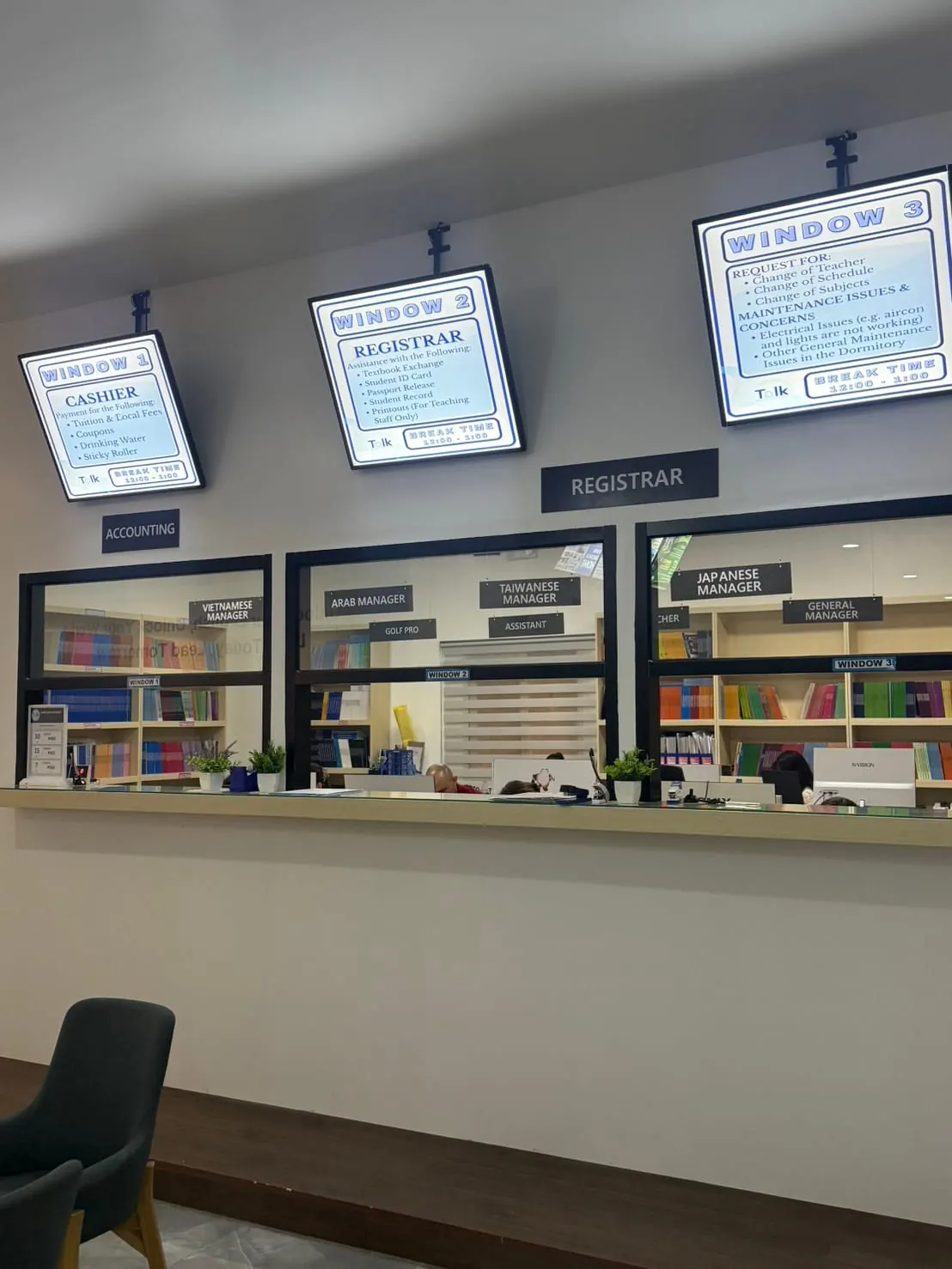
The school's front counter is split by function and by language: alongside cashier, registrar and accounting there are desks for the individual language markets.
A practical problem explained in your own language takes three minutes. Explaining it in English can take twenty and still not land — and then the afternoon class is ruined too. The place for English is the classroom, not an air-conditioner repair request.
Her own conclusion
"These thoughtful arrangements made my life much easier and helped me adapt faster to studying in a foreign country."
Notice the phrase "adapt faster." The fewer domestic chores there are, the sooner you can hand your whole attention to English. On a four-week course in particular, you cannot afford to lose time to that settling-in period.
Another student at the same school wrote about the meals and the dorm room in more detail:
Two more questions for your counsellor
Besides the course and the price, ask how often laundry is done, how often the room is cleaned, and what the meal times are. Those three answers tell you how much of your evening is left.
Want to know about the courses?
Enrolment, start dates and quotations for Talk Academy are handled by partner agencies in each country. Tell them your level honestly, and how many weeks you can take.