The nationality mix — the thing nobody asks about
There is one question almost every study-abroad counsellor hears: "are there a lot of students from my country at that school?"
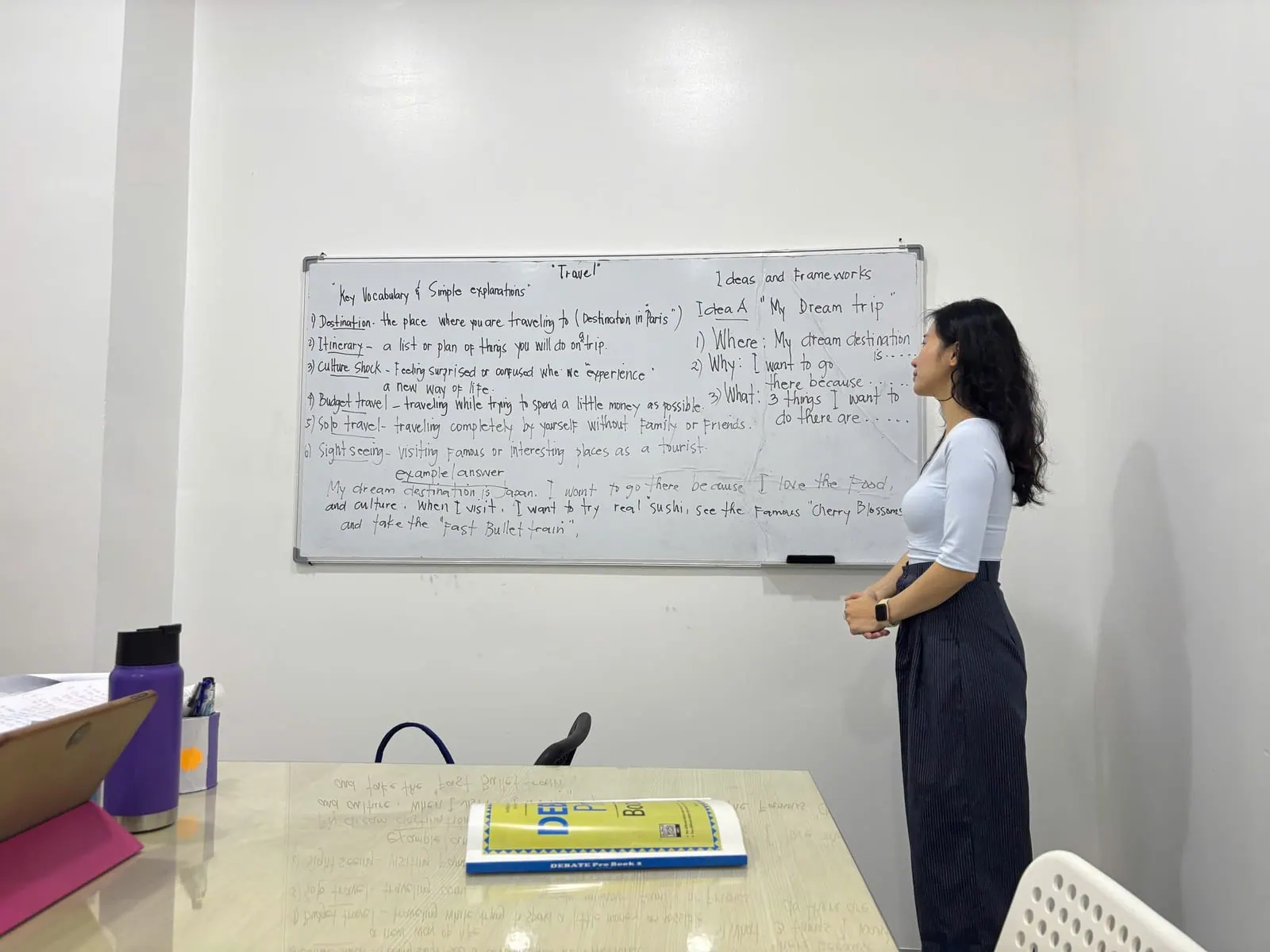
What is interesting is that two opposite fears live inside the same question. Too many, and you worry you will drift back into your own language after class. None at all, and you worry about week three, when there is nobody who can hear you say you miss home. Thanh Hà Tô, a Vietnamese student on TALK6 Hybrid A and one month into a 12-week course, answers exactly that.
Her answer
"The multicultural international environment helps me train my English reflexes anywhere, any time. The best part is that the student mix is very balanced: enough international friends to practise speaking with, and enough Vietnamese compatriots for a bit of warmth when I miss home."
The word to notice is "balanced" — not "no Vietnamese" and not "lots of Vietnamese."
This is not a question of willpower. If everyone around you speaks your language, you will switch back to it after eight periods, and that is simply what a tired brain does. But if for twelve weeks nobody can hear how homesick you are, you go home early or you coast. The question to put to an agency is not "are there people from my country" but "what is the nationality mix right now."
Eight periods a day
"Every day is extremely full with 8 periods (6 one-on-one classes and 2 group classes)."
That is exactly the TALK6 Hybrid structure: six one-to-one periods plus two group periods. Six one-to-one periods means six different teachers in one day — six voices, six ways of asking a question, and six separate occasions when you have no one to hide behind.
Compare that with a school in an English-speaking country, where most of the timetable is group classes and the classes are usually bigger. You hear more English, but the minutes you personally spend speaking are far fewer. That number is the real difference the Philippine model makes.
Group classes capped at eight
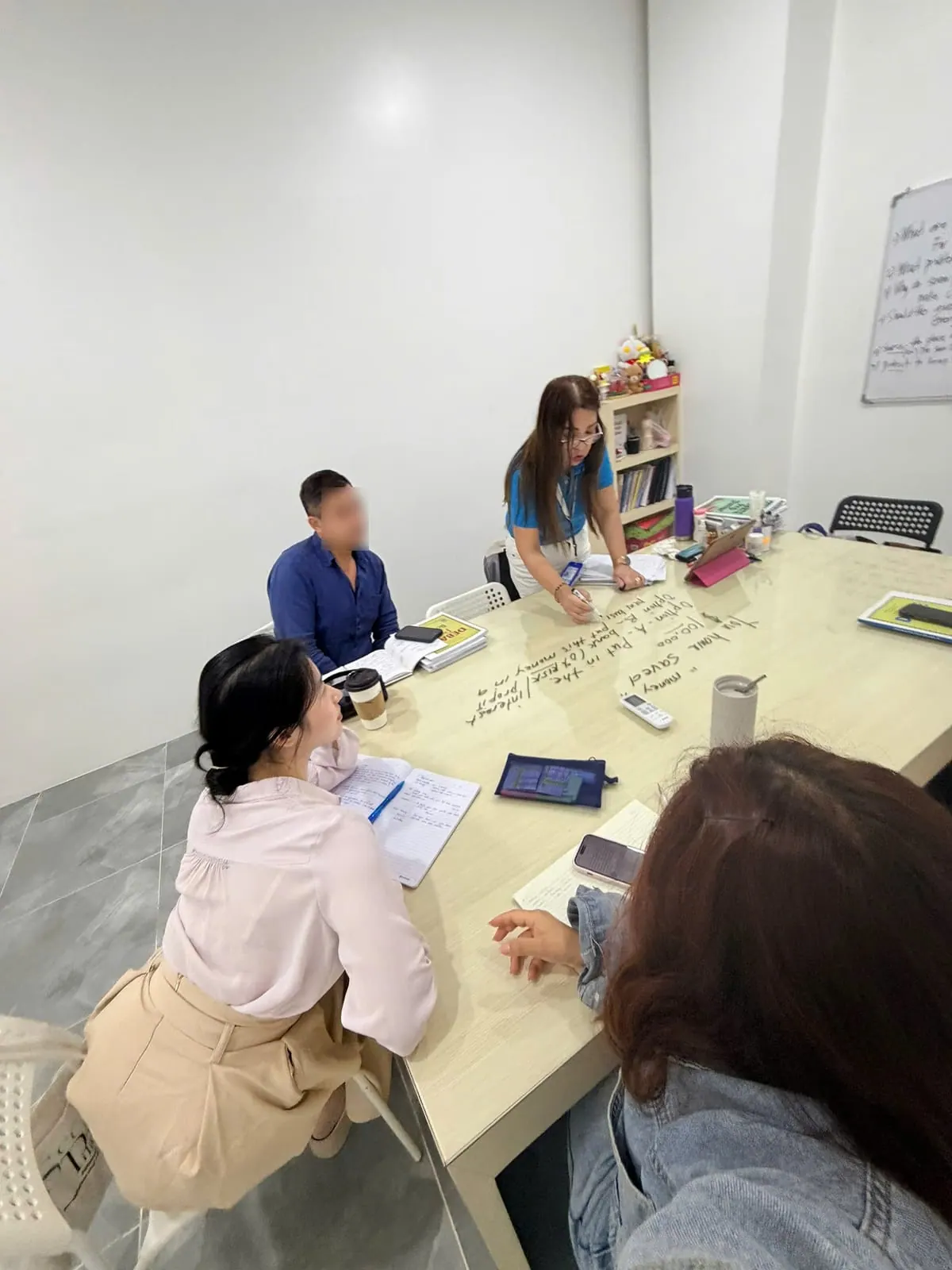
"What I like most are the group sessions — a maximum of 8 students, so the atmosphere is always lively, the teacher interacts constantly, and everyone gets a chance to speak."
The last clause is the important one. "Everyone gets a chance to speak" is a division problem. Fifty minutes split between eight people still leaves each person several minutes; split between fifteen, the quiet ones sit through the whole period in silence and nobody notices.
And the food
"Bonus ten out of ten for the school kitchen: the food is clean, well cooked and really suits my taste — it erased every worry I had before coming."
She adds, half-joking, that her teachers and classmates have noticed she is putting on weight. On a twelve-week course that is not entirely a joke — being able to eat is a precondition for surviving eight periods a day.
One month in
"One month of ESL study in the Philippines has gone by as fast as a dream!"
She is one third of the way. Eight weeks left.
A Taiwanese student wrote in more detail about how a group class actually runs:
If you are choosing a school
Ask for three numbers rather than an impression: periods per day, maximum size of a group class, and the current nationality mix. Those three predict how many minutes you will actually speak better than any brochure does.
Want to know about the courses?
Enrolment, start dates and quotations for Talk Academy are handled by partner agencies in each country. Tell them your level honestly, and how many weeks you can take.