Study English in the Philippines: Choosing an English School
The short version: people study English in the Philippines because it is the one place where several hours of one-to-one class a day is the normal package rather than an expensive add-on. Almost everything else — the city, the dorm, the textbook — matters less than that number and what you do with it.
This guide is the map. Each section is short on purpose and links to the longer article on that one thing.
Why the Philippines, specifically
Three things stack up, and it is worth being plain about all three.
One-to-one is the default. In most countries a private lesson is billed on top of a group course. Here it is the spine of the timetable. A typical day carries four to six one-to-one slots plus group classes — what actually happens inside one of those booths is less dramatic and more useful than people expect.
The cost structure is different. Tuition, a dorm bed and three meals a day are usually sold as one package. That is unusual, and it is why a month in the Philippines can cost less than tuition alone elsewhere. We go through the arithmetic in what English study in the Philippines really costs.
The reason is the labour market, not a teaching secret. Wages in the Philippines are lower than in Ireland or Australia, so hours that would be unaffordable elsewhere are affordable here. Say it out loud and the rest of the decision gets easier: you are buying *volume of speaking time*, and you should judge a school on whether it protects that volume.
What it does not fix
A guide that only sells is not a guide.
- It does not make you fluent in four weeks. Four weeks reliably changes your *reaction speed* and your willingness to open your mouth. It does not rebuild your grammar. What changes at 4, 8 and 12 weeks is the honest version.
- It does not work on its own. Students who spend their evenings in their own language go home with much less than their timetable suggests.
- It fades if you stop. The first thing to go is speed, not vocabulary. There is a plan for that in keeping your English after you go home.
If you want a course abroad mainly for listening and reading, the one-to-one advantage shrinks — those are things you can do alone, anywhere.
Which city
Three names come up, and they are genuinely different rather than interchangeable.
| Roughly | |
|---|---|
| Cebu | The largest cluster of schools and the most choice. A city and a holiday destination at once, which cuts both ways. |
| Baguio | Mountain city, cool, strongly associated with strict and semi-strict programmes. |
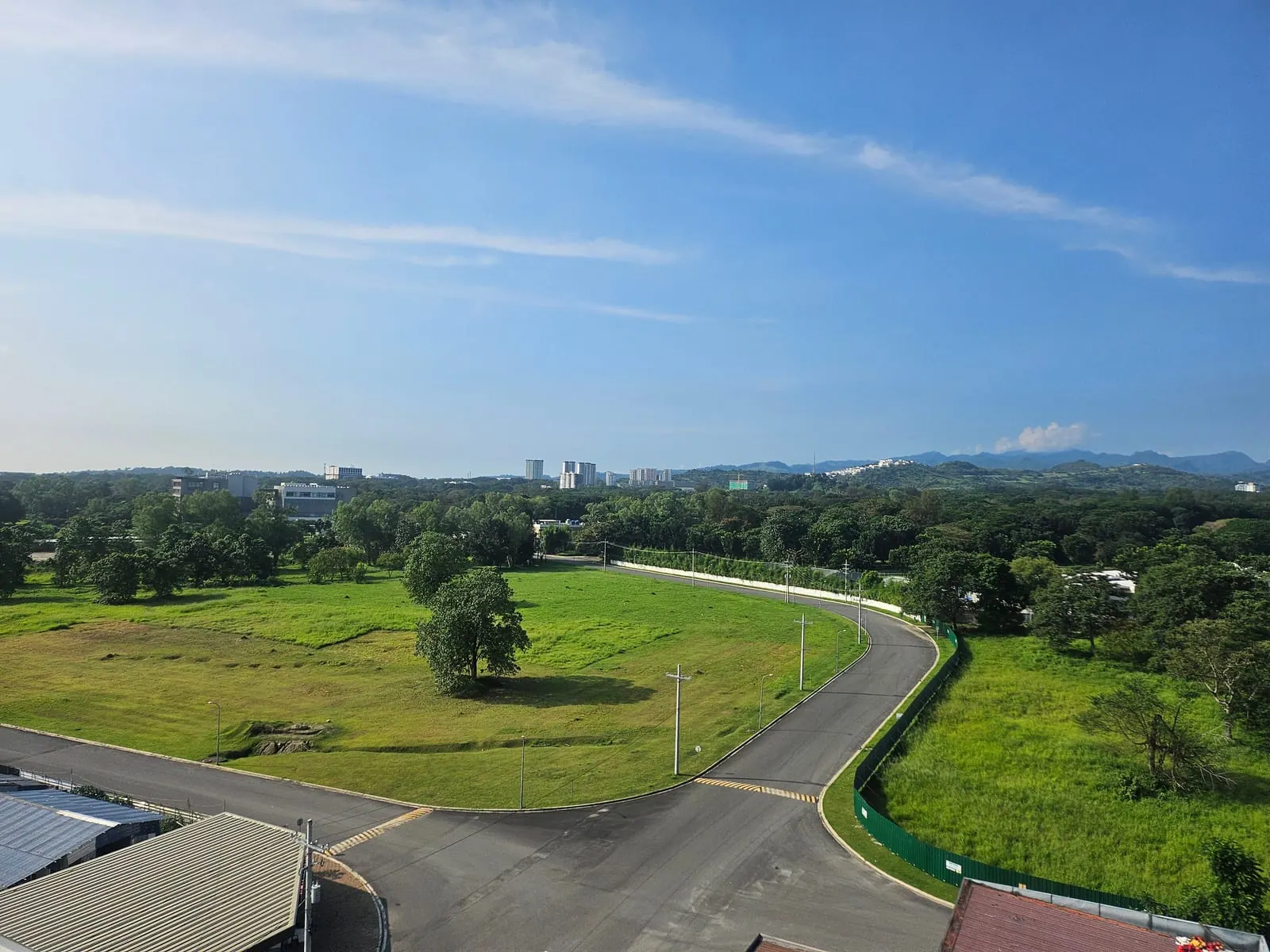
| Clark | A former air base, now a managed freeport zone north of Manila. Quieter, enclosed, with its own airport. |
The honest comparison — including what each one costs you, and who each city suits — is in Clark vs Cebu vs Baguio: how they really differ.
If you are weighing the Philippines against a Western destination instead, the trade-offs are laid out for Canada, Australia, Ireland, New Zealand and Malta. The short answer: you give up the English-speaking street and you buy back class hours.
What a day looks like
Morning classes, lunch, afternoon classes, a study period, dinner, and an evening that is yours — or isn't, depending on the programme. A weekday hour by hour is the concrete version.
Two things decide whether that day is sustainable rather than merely intense:
- How many one-to-one hours you actually take. Eight hours of unprepared class is worth less than four prepared ones. Ask what the school recommends for your level, not what the maximum is.
- Whether there is an English-only rule, and how it is enforced. What the English-only rule does — and where it stops working — is worth reading before you choose a strict programme.
How long to go for
- Two weeks — a reset, not a transformation. What two weeks can realistically fit.
- Four weeks — the most common length. Enough for the first jump in reaction speed.
- Eight to twelve weeks — where structural change starts, and where boredom becomes a real risk to manage. Three months, month by month.
If you are working, the constraint is usually leave rather than money — four weeks off work and three routes for studying while employed cover the usual arrangements.
What it costs
A quote normally covers tuition, a room, weekday meals and some school services. It normally does not cover flights, insurance, government fees, textbooks, weekend food, or the deposits you pay on arrival. Eleven things the quote tends to omit is the checklist to hold a quote against.
The government fees are the part people forget, and they are fixed in pesos rather than negotiable:
| SSP (Special Study Permit) | ₱7,800 per application |
| ACR I-Card (stays over 59 days) | ₱4,500 |
| Visa extension | ₱3,000–6,000 each time |
At roughly ₱58 to the US dollar that is about USD 135 for the SSP and USD 78 for the ACR I-Card. Two cautions. First, the SSP is charged per application, not per stay — some immigration offices issue it only for the length of the course you registered, so extending your course can mean paying it again. Do not plan on "one payment, whatever happens". Second, fees and exchange rates change; treat these as the figures to check against, not as a promise.
The paperwork
Most nationalities arrive visa-free for a short stay and extend from inside the country. The SSP is separate from your visa and is what makes studying legal. Whether you need more depends on how long you stay — do you need a visa to study English in the Philippines walks through the combinations, and the documents to bring lists what the school will ask you for.
One thing to confirm in writing before you pay: is the school licensed to process an SSP for you? Not every operation that calls itself a language school is.
Who will actually teach you
In a Philippine school your one-to-one lessons are with Filipino teachers. That is the model, and it is the reason the hours exist at all.
Some schools also employ native speakers, but it is worth asking what they do. At a number of schools — ours included — native speakers work as teacher trainers: they coach the Filipino teaching staff rather than appearing in student classes. That is a legitimate structure, but it is not what a prospective student assumes when a brochure says "native speakers on staff". Ask directly whether a native speaker will teach you, how often, and in what format. A school that answers plainly is telling you something about the rest of its answers.
On the accent question, which everybody asks and few ask out loud: what happens in week two when you cannot follow your teacher, and why you cannot follow English yet, and what fixes it.
How to tell schools apart
Marketing pages converge. The differences show up in the answers to specific questions — ten questions to ask a Philippine English school is the list we would use ourselves, and five claims to check covers what "best school" pages actually mean.
Beyond that, two practical filters:
- The nationality mix. It decides what language you speak at dinner. Why it matters more than the brochure suggests.
- The things nobody asks about. Rooms, meals, laundry — what dorm life is actually like is what students complain about afterwards, not the curriculum.
And before you transfer money: what to check before you pay.
If you have a specific goal
- A test score — IELTS preparation over eight weeks. No school can promise a score; what it can do is give you more attempts at speaking under correction, and what the level test on day one measures tells you where you are starting from.
- Work English — what a business English course in the Philippines costs, and what it covers.
- Pronunciation — how correction actually works, which is less about imitation than people think.
Is it safe
The useful answer is situational rather than a yes or a no. Eight situations covers the ones that actually come up — transport at night, money, what to do when you are ill. Clinics and pharmacies is the one to read before you need it, not after.
In short
- You are buying one-to-one hours, not a country. Judge every school on whether it protects them.
- Four weeks moves your reaction speed; eight to twelve moves your structure.
- The quote is not the total — add flights, insurance, deposits, weekend food, and ₱7,800 for the SSP each time you apply.
- Confirm the school can issue an SSP, and ask who will actually teach you.
- Cebu, Baguio and Clark are different products. Pick the one that fits how you want to live for a month, not the one with the best photos.
- What you do after class and after you go home decides how much of this you keep.