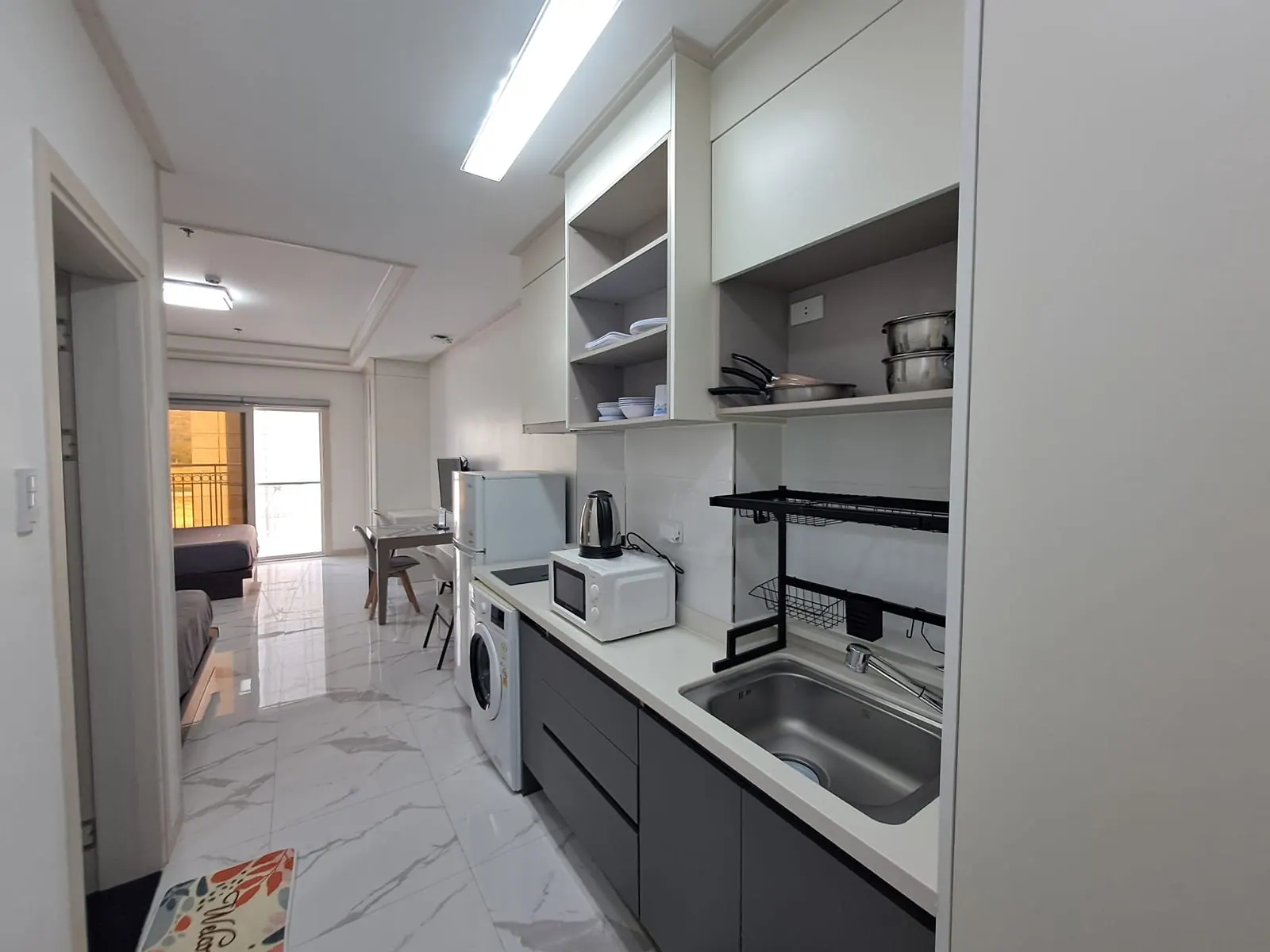
Cooking in the Dorm Kitchen: What to Check First
Somewhere around week three, many students have the same thought: tonight I would like to eat something I chose myself.
It is rarely because the canteen food is bad. three meals a day on weekdays on a fixed schedule is a comfortable system, and comfortable systems become repetitive. You miss dinner because a class ran long. You wake up at eleven on a Saturday and breakfast ended hours ago. You are ill and want something warm and plain. You are fasting, or you do not eat pork, and the tray in front of you is not the answer.
That is when a kitchen starts to sound appealing. Before you plan around one, check whether you will have access to it at all.
This is not self-catering study abroad
If your reference point is a language course in Canada, Australia, Ireland, or New Zealand, the difference runs the opposite way from what you might expect. In those countries, cooking is not a hobby — it is how you eat. In a Philippine residential school, meals are usually part of the package, and cooking is optional.
| Clark, residential school | Canada, Australia, Ireland, New Zealand | |
|---|---|---|
| Daily meals | Normally three, included in the course fee | You buy and prepare most of them |
| Time spent on food | Close to zero | Shopping, cooking, washing up most days |
| Kitchen access | Depends on the building and room type | Standard in a share house or apartment |
| What cooking is | A supplement, for the gaps | A daily requirement |
| Where the money goes | Mostly prepaid | A live weekly expense you manage yourself |
This is one of the quieter differences between the two models, alongside flight time and visa rules. A wider comparison sits in Clark versus Australia for English study.
So the honest framing is this: you are not moving into a place where you cook. You are moving into a place where you eat, and where a kettle or a hotplate may occasionally rescue you.
The one thing to confirm before you enroll
Kitchen facilities are not a standard feature. They differ by building, by room type, and by program. Some accommodation has a shared kitchen area. Some has a microwave, a water dispenser, and nothing else. In many rooms, cooking is simply not permitted — usually for fire-safety and pest-control reasons rather than to make life difficult.
So this article will not tell you that Clark dorms have kitchens. Ask these four questions instead, and get the answers in writing:
- Is any form of cooking allowed in the room type I am being quoted?
- If there is a shared kitchen, where is it, what hours does it open, and what are the rules?
- What equipment is there — hotplate, microwave, refrigerator, water dispenser?
- May I bring my own appliance, such as a small rice cooker or kettle?
Answers vary by school and change over time, so a forum post from two years ago is not evidence. TALK enrolls students through partner agencies rather than directly, which works in your favor here: ask the agency to put the kitchen answer in the quotation, next to the room type. Room types themselves are covered in dorm life: rooms, meals, and laundry.
If self-catering is a genuine requirement for you — for religious, medical, or budget reasons — settle it before you pay, not after you arrive. A residential program is the wrong format for someone who needs to cook every meal.
What is worth buying, and what is not
Assume minimal equipment and build from there. The most useful items are the ones that need hot water and nothing more.
| Type | Examples | Note |
|---|---|---|
| Instant | Noodles, cup rice, instant soup | Works even with only a kettle |
| Shelf-stable | Tuna, seaweed, chili paste, nut butter | Survives a hot room |
| Fresh | Fruit, yogurt, eggs | Only if you have confirmed refrigerator access |
| Drinks | Bottled water, coffee, tea | Buy water; do not drink from the tap |
| Snacks | Nuts, cereal, biscuits | Cheaper and lighter than late-night delivery |
Use bottled or dispenser water for drinking and for cooking. Many schools keep a dispenser in the building — ask how refills work during orientation.
Clark has large supermarkets and shopping malls, and some stores carry Korean, Japanese, and other imported food. Locations, opening hours, and stock all change, so check current details after you arrive. Three habits that help: do one big shop on your first weekend, so weekdays stay simple; go with other students, because the fare splits and someone else can carry the water; and buy the heavy items last. Getting there is covered in getting around Clark: Grab and jeepneys.
One caution about money. Cooking here does not save you anything, because your meals are already paid for. Groceries, snacks, and delivery are spending on top of a full board fee, and they add up quietly. The fixed government costs do not move either: an SSP at ₱7,800 per application, an ACR I-Card at ₱4,500 for stays longer than 59 days, and visa extensions at roughly ₱3,000–6,000 each. The SSP is charged per application rather than once for life — some immigration offices issue it only for the length of the course you registered for, so extending your stay can mean paying it again. Tuition, flights, and living costs vary by school and season, so take those from your quotation rather than from any blog.
Storage, heat, and other people
In this climate, storing food is harder than preparing it. An open packet left on a desk attracts ants within a day. This has little to do with how clean you are; it is the temperature.
- Move anything opened into a sealed container immediately.
- Refrigerator space is usually shared. Label what is yours and do not leave it there for a week.
- Clear the shelf out once a week, on the same day. Sunday works, because you are already tidying.
- Take food waste out of the room the same day it is created.
Then there is the social side, which causes more friction than the cooking itself. Strong-smelling food late at night in a shared room is a common complaint between roommates, and it is easy to avoid by choosing your timing. Clean the shared kitchen the moment you finish — the person after you is the one who will remember. And if you do cook, offering some to a classmate is a genuinely good move: describing a dish from your country, in English, to someone who has never eaten it, is better speaking practice than most textbook exercises.
Questions people ask
Will cooking save me money?
No. It is extra spending on top of meals you have already paid for. Cook because you want a specific thing, not as a budget strategy.
Can I bring a rice cooker or a portable stove?
Ask before you buy. Personal cooking appliances are restricted in many dorms, and an item you are not allowed to use is wasted luggage weight.
I need halal or vegetarian food. Is a kitchen the solution?
Not primarily. Declare the requirement through your agency before enrollment and ask what the canteen can actually do. A canteen cooking for a whole campus has limits, and it is better to hear them early. A kitchen you may not be allowed to use is not a backup plan.
Does cooking eat into study time?
It can. Shopping, cooking, and cleaning up all take time, and that time usually comes out of your evening. Cooking now and then costs you nothing meaningful. Cooking most nights, on a course you are paying for by the week, is worth questioning.
Is tap water safe to drink?
Treat it as unsafe for drinking and for cooking. Use bottled or dispenser water.
The short version
Meals are included, so the kitchen is a supplement for the gaps: missed meal times, weekends, illness, and days when the tray does not suit you. Whether you have one at all depends on your building and room type, not on the city. Assume minimal equipment, keep everything sealed against the heat, and remember that groceries are money added to a bill you have already paid.
If cooking access is a real condition for you rather than a preference, get it confirmed in writing before payment. Ask a partner agency to state the kitchen rules for your specific room type in the quotation.