Dorm Bathrooms and Laundry at a Clark School
Most complaints about an English course in the Philippines are not about the lessons. They are about a towel that never dries, a shower that runs cool at six in the morning, and a shirt that comes back from the laundry smelling of someone else's detergent.
These things sound small. They also repeat every day, which is why they shape how people remember the whole stay. Most of them stop being problems once you know what to expect and pack accordingly. Buildings and room types differ, so read this as the general picture for Clark and confirm the details with your own school before you register.
Why this is not like studying in Canada or Ireland
If you have compared Clark with Canada, Ireland or New Zealand, you have probably compared tuition and flights. The daily routine is a bigger difference than the price list. In most Western programs you live in a homestay or a shared flat and handle your own washing. In a Philippine dorm, a lot of that work is done for you — and in exchange you follow someone else's schedule.
| Daily routine | Clark dorm | Homestay or shared flat, Western country |
|---|---|---|
| Laundry | Usually collected on set days, often part of the package | You do it yourself, usually paid per load |
| Drying | Air drying is common; humidity is the limit | Machine dryers are normal |
| Room cleaning | On a schedule set by the school | Your own job |
| Bathroom | Private or shared with roommates, by room type | Shared with the host family or flatmates |
| Hot water | Often a wall unit; temperature varies by time of day | Central hot water, usually steady |
Neither model is better. If you like controlling your own routine, being told which day is laundry day can feel restrictive. If you want your evenings free for study, it is a real advantage. The wider cost comparison is in Clark vs Canada for English study.
The bathroom: what is normal, what surprises people
Hot water is not the same as at home. Many bathrooms use a small wall heater that warms water as it flows, so the temperature drops when you open the tap further. In the afternoon, water that is only slightly warm feels fine. Early morning and after heavy rain, it can feel cold. Learn how your unit works during orientation rather than guessing on the first night.
Ventilation matters more than cleaning. Clark is humid. A closed bathroom stays wet, and anything that stays wet starts to smell. Pushing the water toward the drain after a shower and leaving the door open takes ten seconds and prevents most of the mould people complain about.
Local plumbing habits. A water dipper and bucket are standard in Philippine bathrooms, and many have a hand spray near the toilet. Some buildings ask you to put used paper in the bin instead of flushing, because the pipes are narrow. Follow the sign in your own bathroom.
Do not drink from the tap. Drinking water comes from dispensers or bottles. Many students brush their teeth with tap water without problems, but if your stomach is sensitive, use bottled water for the first week.
Power. The Philippines runs on 220V, and sockets usually take flat two-pin plugs. If you come from a 100–120V country, your hair dryer or shaver may need a converter, not just a plug adapter. Buying a dual-voltage version before you fly is easier than carrying a converter.
Storage is usually tight. A hanging toiletry bag solves this better than a shelf you do not have. Keeping two pairs of slippers — one for the room, one for the bathroom — is a habit most people adopt within a week.
How dorm laundry usually works
| Method | How it works | What to check before you commit |
|---|---|---|
| Collection service | You leave a bag on set days; it comes back washed and folded | Which days, how many items or what weight is included, what happens to delicates |
| Self-service room | You use shared machines in a laundry area | Opening hours, how the queue works, whether detergent is provided |
| Outside shop | You carry it to a laundry shop near the school | Turnaround time, price by weight, whether ironing is extra |
Whichever applies, the same three items save trouble. Mesh laundry bags protect underwear and thin fabrics. Name labels stop your clothes from joining someone else's pile — this is the single most common cause of "lost" laundry. Spare towels matter because towels dry slowly here.
Be realistic about what a shared service can do. Clothes are washed in batches, not sorted the way you would sort them. Dark colours can fade, thin knitwear can lose shape, and printed sports shirts do not always survive. Leave anything you would be upset to damage at home. If something is delicate and you cannot leave it behind, wash it by hand in the bathroom and hang it yourself.
Also check what is included and what is charged separately. Extra loads, express service and ironing are sometimes billed on top of the package. Ask for these to be listed in your quote rather than assuming they are covered — costs vary by school and season. The full picture of dorm arrangements is in dorm life: rooms, meals and laundry.
Drying is the real problem
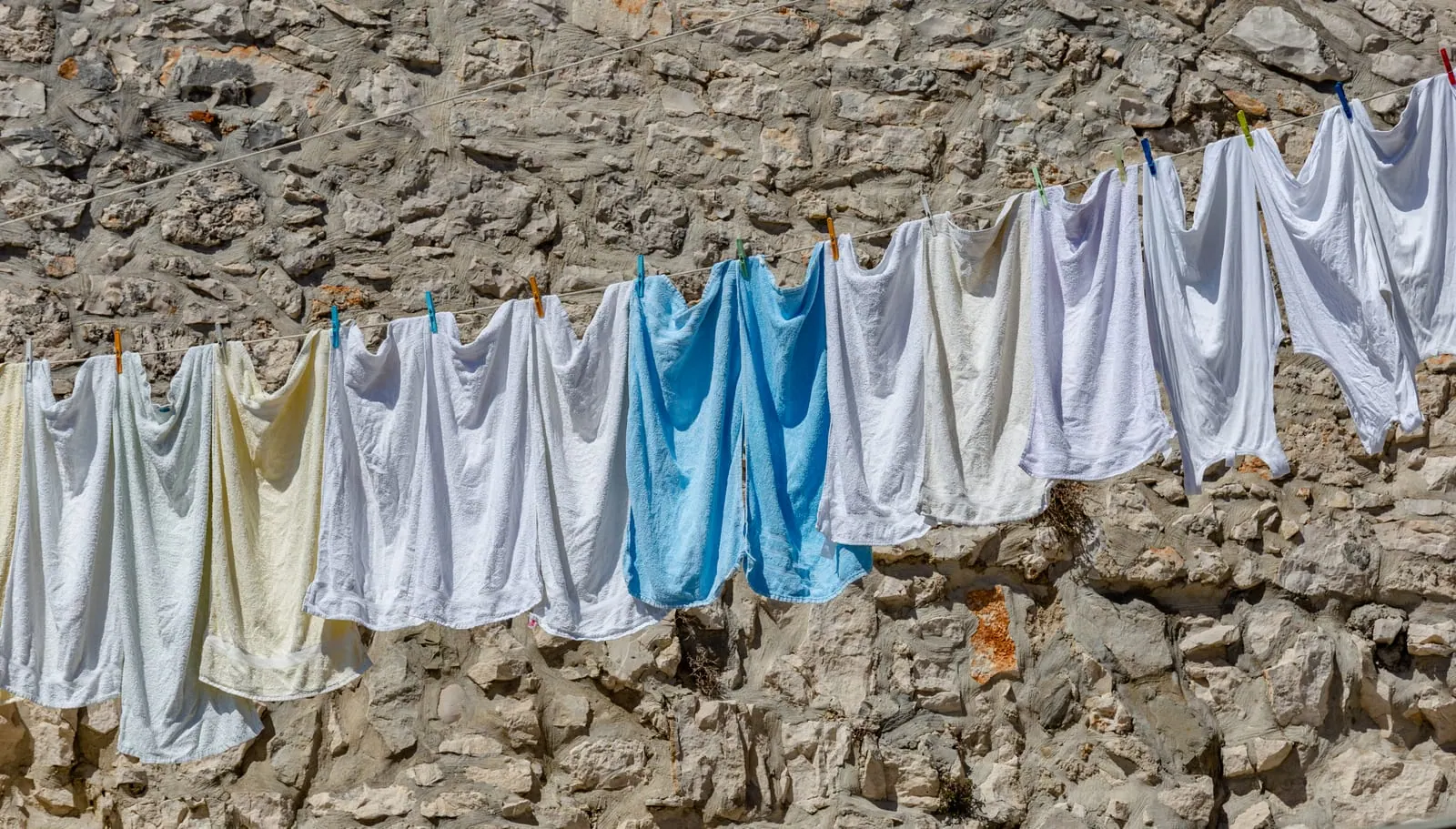
This is where students from dry or cold climates get caught. Wash something, hang it indoors, and twenty-four hours later it can still be damp.
- Choose airflow over sunshine. A shaded balcony with moving air beats a hot windowsill with none.
- Do not let items touch. Spacing hangers apart changes drying time more than anything else you can do.
- Work around the rain. In the wet season, watch the forecast for your hand washing; with a collection service the days are fixed, so plan what you wear around them.
- Rewash anything that smells. Folding a slightly damp item spreads the smell through the whole wardrobe.
- Pack fabrics that cooperate. Quick-dry synthetics dry in hours; thick cotton can take a full day.
Practical consequences for your suitcase: bring more underwear and socks than you think you need, one light jacket because indoor air conditioning is strong, a few hangers, a small bar of laundry soap for hand washing, and a waterproof pouch that works for the bathroom, the pool and rainy days.
Questions people ask
Are towels and bedding provided?
It depends on the school and the room type. Even where they are provided, most students bring one or two of their own towels.
Can I choose a private bathroom?
Usually yes, through the room type you select. A single room with a private bathroom costs more than a shared room; the difference appears on your quote. Schools such as TALK enrol students through partner agencies, so ask the agency to confirm which room types are actually available for your dates.
What if I get my laundry back damaged?
Report it immediately, not at the end of the month. Most schools will look into it while the batch is still traceable. Prevention is better: labels, mesh bags, and nothing precious in the pile.
How often is the room cleaned?
Schedules vary and are explained at orientation. Confirm it in your first week so your expectations match the rules.
I am worried about mould.
Air movement solves almost all of it. Do not keep wet towels in the bedroom, open the wardrobe occasionally, and do not leave shoes in a closed dark corner.
Short version
Bathrooms and laundry are not glamorous topics, but they decide whether the daily routine feels easy or tiring. Four items handle most of it: mesh laundry bags, name labels, spare towels, and clothes that dry quickly. One habit handles the rest: keep air moving.
Before you commit, ask the school exactly which laundry method applies, which days it runs, what is included, and what is billed extra. Those four answers prevent nearly every misunderstanding. A longer list of pre-booking questions is in ten questions to ask a school, and your partner agency can confirm the room and facility details for the dates you have in mind.