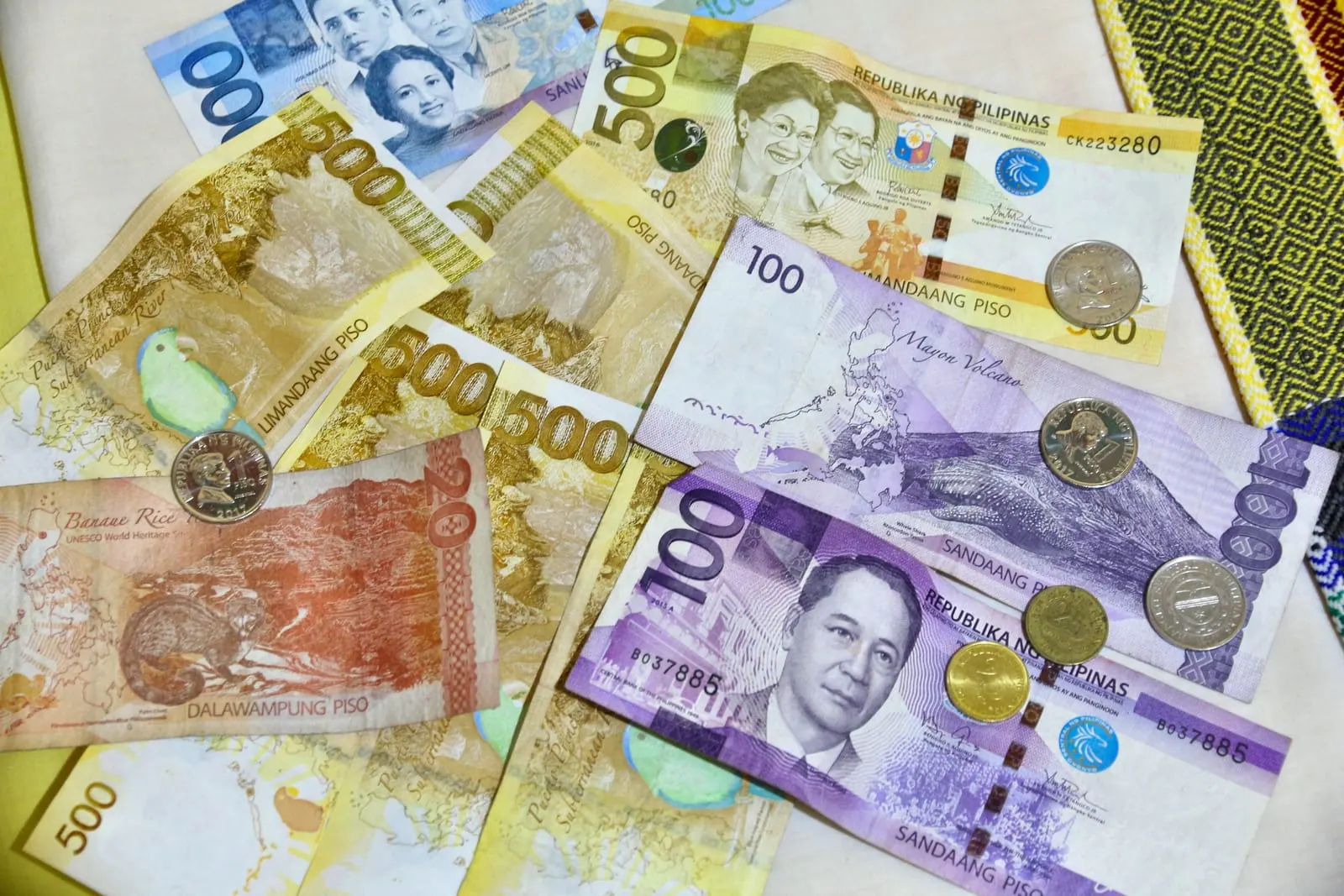
Cash, Cards and Apps in Clark, Week by Week
Most money advice for the Philippines answers one question: how much should I bring. That is the easy part, and your agency's quotation answers it better than any blog can.
The harder question comes at the counter. You are standing in front of a cashier, a driver, or an immigration desk, and you have to decide what to hold out right now. Card readers that do not work, a ₱1,000 note nobody can break, an app that refuses to verify your foreign passport — these are first-week problems, and they have nothing to do with your budget size.
This article is about timing and method rather than totals. For the wider picture of budgeting and exchanging money, see handling money in the Philippines.
Your spending is not flat — it follows a timeline
Students often assume they will spend roughly the same amount each week. In practice the first week is expensive and awkward, the middle weeks are quiet, and then a bill appears again if you extend.
| When | What you usually pay | Usual method |
|---|---|---|
| Before you fly | Course and accommodation, arranged through your agency | Bank transfer from home |
| Arrival day | Transfer, SIM card, water, first meals | Cash in pesos |
| Week 1 | Government fees collected by the school, books, deposits | Cash, unless the school says otherwise |
| Week 2 onward | Food, transport, laundry extras, weekends | Mostly cash, cards in malls |
| When your entry stay runs out | Visa extension, and a second permit if you extend the course | Cash |
| Final week | Balances, gifts, extra baggage at the airport | Mixed |
The government fees are the part international students underestimate, because they are not part of the tuition figures they compared against Canada or Malta:
| Item | Amount | What to know |
|---|---|---|
| SSP (Special Study Permit) | ₱7,800 per application | Not automatically a one-time cost. Some immigration offices issue it only for the length of the course you registered for, so extending your course can mean paying again |
| ACR I-Card | ₱4,500 | Applies to stays longer than 59 days |
| Visa extension | ₱3,000-6,000 per extension | Charged each time, not once |
Course fees, flights and living costs vary too much by school and season for any honest number to appear here — read them off your quotation. The fees above, however, are set by the Philippine government and apply to you regardless of which school you pick. The order and paperwork are covered in SSP, ACR and visa steps for students.
Cash: the note size matters more than the amount
Clark runs on cash outside the malls, and it runs on small notes. A ₱1,000 note is close to useless at a food stall, a tricycle, or a small shop early in the day, because change is genuinely scarce.
- When you exchange money, ask for a mix that includes ₱100 and ₱50 notes. It sounds trivial. It saves your first week.
- Carry roughly one day's spending. Leave the rest in the room safe.
- Split what you carry between two pockets or bags. Losing one should not end your day.
- Keep some coins. Transport and small tips are easier with them.
ATMs are where the quiet costs sit. You are usually charged a per-withdrawal fee by the local machine, then a foreign-transaction or withdrawal fee by your own bank, and withdrawal limits are often low. Five small withdrawals cost far more than two larger ones. Also, when a machine asks whether to charge you in your home currency or in pesos, choose pesos — the "convenience" conversion offered on screen is normally the worse rate.
Cards: two cards, two jobs
Treat one card as a tool and the other as insurance.
- Daily card — in your wallet, used at malls, chain cafés, supermarkets, pharmacies.
- Backup card — in the room safe, untouched. It exists for the day the first one is lost, cloned, or blocked.
Before you fly, do three things that take ten minutes and prevent most problems: confirm with your bank that overseas payments and overseas ATM withdrawals are enabled, turn on transaction alerts, and write down your bank's international lost-card number somewhere other than on the card. If the card disappears, that number disappears with it.
The honest downsides are worth knowing in advance. Some smaller merchants add a surcharge for card payments, and some terminals simply fail without explanation. A card that worked fine at the mall on Monday can also be blocked on Tuesday by your bank's fraud system, simply because it is being used somewhere you have never used it before.
E-wallets: useful if they work, not something to plan around
Local e-wallets are everywhere in Filipino daily life, and you will see the QR codes at counters. That does not mean you can use them.
Registration normally requires identity verification and, in practice, a local number and sometimes local banking access. Requirements change, and short-stay foreign students are not the users these apps are built for. Plan as if you will not have one. If it works, it is a bonus.
One practical exception: ride-hailing and delivery apps often let you select cash as the payment method, so you can still use the service even if the wallet itself is never verified. Local transport options are compared in getting around Clark.
Common questions
Can I get by with cards only?
No. You can survive, but you will be limited to malls and chains, which is not where most of the interesting food is.
Should I bring my home currency in cash to change there?
US dollars are the easiest to change at exchange counters. Less common currencies may get a poor rate or be declined outright, so check before you fly rather than at the airport.
Can I open a local bank account as a student?
For a short course, generally not practical. Plan around your home bank.
My card was declined at the mall. What now?
Use the backup card, then contact your bank. An overseas block is the most common cause, not a lack of funds.
Who tells me the exact fee amounts and payment method for my school?
Your agency. TALK enrolls students through partner agencies rather than directly, and the agency handling your file will confirm what is collected on arrival, in what form, and when.
Short version
Cash first, card second, app last. Hold small notes, keep a day's spending on you and the rest in the safe, and run a second card you never touch. Expect the government fees — ₱7,800 for the SSP, ₱4,500 for the ACR I-Card, ₱3,000-6,000 per visa extension — to arrive in lumps rather than spread evenly across the course, with the first lump in week one. If you plan to extend, ask before you commit whether a second SSP payment will apply, because that is the cost most students find out about too late.