What an English Course in Clark Includes — and What It Doesn't
Most people searching for the price of an English course in the Philippines want one number, and schools rarely give one. When a website does publish a figure, it is usually incomplete rather than dishonest: one quotes tuition only, another adds the dormitory, a third leaves out everything you pay after you land. The totals are often closer than they look — what differs is what the quote contains.
This article gives no figures for tuition, flights, or living costs. Those move with the season, the room type, the exchange rate, and the program. What it gives you is the structure.
What a quote actually contains
Nearly every quote from a Philippine school reduces to five lines.
Tuition and accommodation, sold together. The largest part, and the main structural difference from studying in Canada, Ireland, or Australia. There you pay tuition, then find a room, then buy food. Here the school normally sells all three as one package, usually with weekday meals — which is why a Philippine quote looks small next to a Western one covering classes only. You are not comparing like with like.
Government fees — SSP, visa extensions, ACR I-Card. Rarely in the first quote you receive, and the subject of the next section.
Food outside the package, flights from your own country, and everything else: insurance, textbooks bought after arrival, weekend trips, and a reserve you hope not to use.
Two questions settle most of the gap between two quotes: how many lessons a day, and how many of those are one to one? And are weekend meals included? Ask both in writing. A quote with more one-to-one time is not overpriced; it is a different product.
What changes as the course gets longer
Longer is cheaper per week, but not in every line. Some costs are fixed whatever you do; others repeat on a schedule set by immigration rules, not by the school.
| Length of stay | Paperwork that applies | What drives the cost |
|---|---|---|
| Up to 4 weeks | SSP; an extension only if you stay past your visa-free days | Airfare and the SSP are fixed, so the cost per week of study is highest |
| 8 weeks | SSP; at least one visa extension | Fixed costs spread further; extensions start to repeat |
| 12 weeks | SSP; repeated extensions; ACR I-Card once you pass 59 days | A new one-off fee appears, and extensions keep coming |
| 24 weeks or more | All of the above, plus a possible second SSP | Lowest cost per week, highest total, most exposure to the exchange rate |
Airfare and the first SSP cost the same whether you study four weeks or twelve, so a very short course carries heavy fixed costs for little study time. If you are still weighing lengths, four, eight or twelve weeks compared covers the learning side of the same choice.
Government fees, and why the SSP is not a one-time payment
Every foreign student at a Philippine language school needs a Special Study Permit. These amounts are set by government offices, not by schools, so they are the one part of your budget that does not vary by school.
| Fee | Amount | When it applies |
|---|---|---|
| SSP (Special Study Permit) | ₱7,800 per application | Every student at a language school |
| ACR I-Card | ₱4,500 | Stays longer than 59 days |
| Visa extension | ₱3,000–6,000 per extension | Each extension beyond your visa-free entry |
The key words are per application. The SSP is not a payment for life, and not always one payment per trip either: the permit is tied to the school and the course you registered for, so a large change of plan can mean applying — and paying — again. Arrive for four weeks, enjoy it, extend to twelve, and a second application is possible. Deciding your length realistically at the start is usually cheaper than booking short and hoping.
Visa extensions run on your passport, not on your timetable. Visa-free days on arrival differ by nationality, so check yours before booking flights, and count from your arrival date, not your first day of class. The 59-day threshold for the ACR I-Card is the same for everyone.
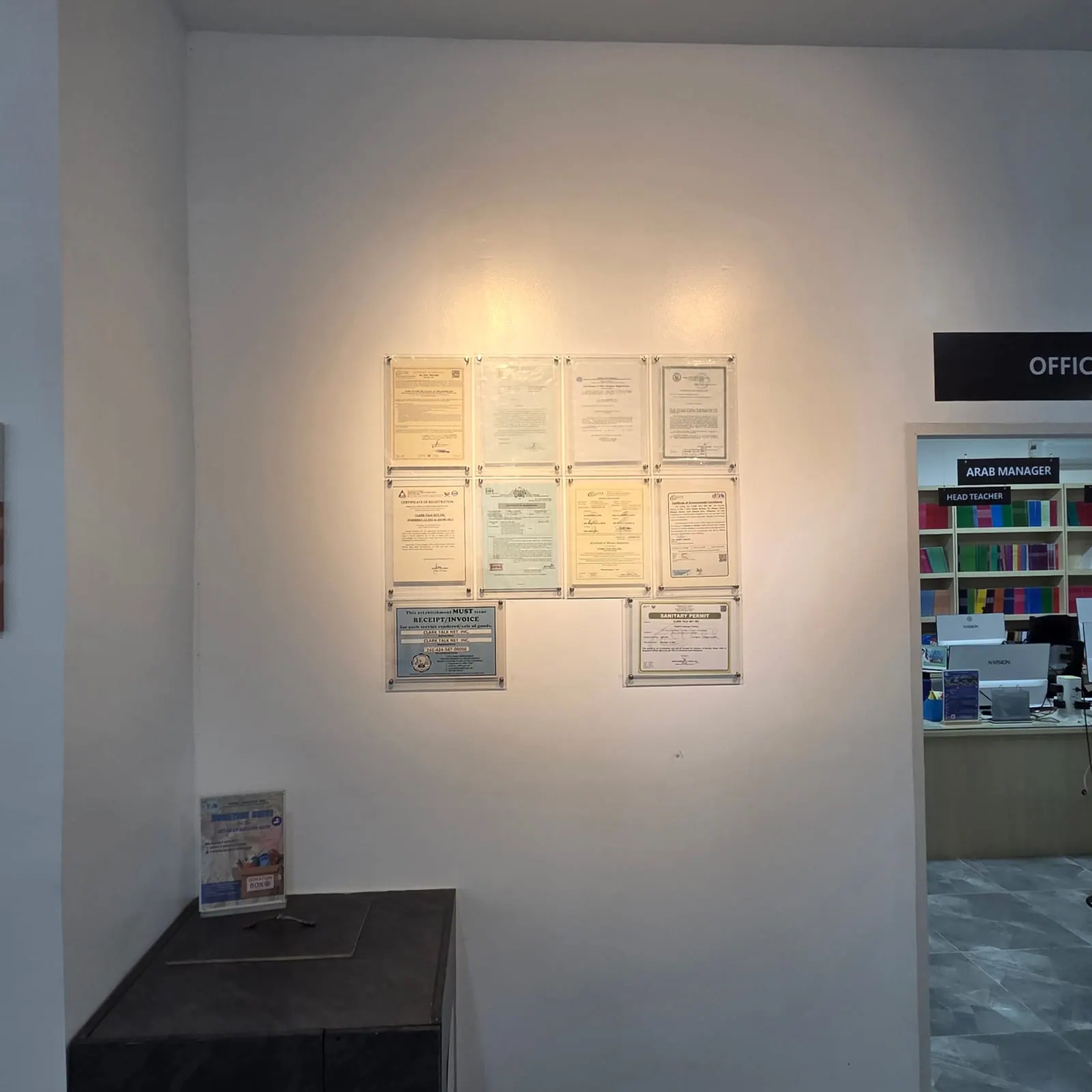
One check before you transfer money: only accredited schools can process an SSP. A quote with no SSP line may simply reflect how that agency formats its paperwork, or it may mean the school cannot issue one. Ask, and watch how quickly and how specifically they answer. Details are in SSP, ACR I-Card and visa extensions, and the wider budget in the cost breakdown for studying English in the Philippines.
Flights, and the comparison you are really making
Clark has its own international airport (CRK), which removes the long road transfer some other study cities require. Routes and operating days change often, so confirm any schedule with the airline before fixing dates. If nothing connects conveniently, flying into Manila and continuing by road is normal — budget the extra hours and the transfer.
For most international readers the real comparison is not Clark against another Philippine city, but Clark against Canada, Ireland, New Zealand, or Malta. The weekly cost is lower here; the more useful difference is what a week buys. A Philippine timetable is built around daily one-to-one lessons, while most Western schools put the majority of class time in a group. Measured in the minutes you personally spend speaking, the gap is wider than the one in price.
Three things to weigh against that. This is not native-speaker immersion. TALK has a native-speaker teacher, but he does not teach students — his job is training the Filipino teachers. If class time with a native speaker is your main reason for studying abroad, choose a country where that is what you are paying for. The schedule is demanding; people who plan to work remotely in the afternoons often find they cannot. Clark is quiet — a spread-out former base area rather than a walkable tourist city, which suits study and disappoints anyone who wants street life every evening.
Frequently asked questions
Can I get one total figure before I decide?
Yes, but not from a blog. TALK enrolls students through partner agencies rather than directly, so the itemized quote — your dates, your room type, and which of the 13 programs you take — comes from an agency. Ask for it line by line rather than as a single total.
Is the cheapest quote the cheapest school?
Often not. Put two or three side by side and fill in the same six lines: lessons per day, one-to-one lessons per day, room type, weekend meals, government fees, insurance. The ranking changes more often than you would expect.
Should I book short and extend if I like it?
It is allowed, but price it honestly: an extension can mean another SSP application, more visa extensions, and an ACR I-Card you would not otherwise have needed.
In short
There is no honest single price for studying in Clark, but there is an honest structure. Tuition and accommodation come as one package, so the headline figure looks small beside Western schools that charge for classes alone. Government fees are fixed: ₱7,800 per SSP application, ₱4,500 for the ACR I-Card past 59 days, ₱3,000–6,000 per visa extension. Short courses carry the fixed costs hardest; long courses carry more paperwork. Get a written, itemized quote for your exact dates, and treat a quote with no government-fee line as unfinished rather than cheap.