Cebu, Baguio or Clark: When Each Is the Right Fit
Most comparisons of Philippine study cities are written by someone with a school in one of them, which is worth remembering while you read this one. So let us be direct about the bias: this site belongs to a school in Clark, and the argument below is not that Clark wins. It is that these three cities suit genuinely different people, and choosing badly costs you more than choosing a slightly weaker school in the right place.
A side-by-side table of flights, climate and weekends already exists in how Clark, Cebu and Baguio really differ. What follows is the other half of the question: not what the differences are, but who each difference is good for.
Choose Cebu if the environment is part of what you are buying
Cebu is the largest English-study destination in the country and the one most people have heard of, and that scale is a real advantage rather than a marketing artifact. More schools means more programs, more competition on price, more specialization, and a much larger pool of past students whose reviews you can read before committing.
It is coastal, it has its own international airport with a wide range of connections, and the islands and dive sites people picture when they imagine the Philippines are genuinely close. If your course is eight or twelve weeks and you know yourself well enough to admit that you will need the weekends to be interesting, that is not a weakness in your plan. Booking a spartan mountain course and abandoning it after three weeks is the more expensive mistake.
The trade-off is the obvious one, and it is fair to name it: a city with that much to do is a city where it is easier not to study, and larger urban centers mean more traffic and a wider quality range between schools. Cebu rewards students who choose the school carefully rather than the city.
Choose Baguio if you want the friction of an environment with fewer exits
Baguio sits high in the mountains of northern Luzon, at an altitude of around 1,500 meters, and the first thing everyone notices is that it is cool — genuinely cool, to the point of needing a jacket in the evening. For students who find heat exhausting, that is not a minor detail; it is the difference between studying in the evening and lying under a fan.
The city also has a long-standing reputation for intensive, highly structured programs, and a study culture that goes with it. If what you want is a course where the timetable is long, the rules are firm, and there is little competing for your attention, Baguio is where that tradition is strongest.
The trade-offs are travel and options. Getting there means an international flight to Manila and then several hours by road through mountain routes, in each direction, which makes short courses proportionally more costly in time and makes weekend trips out of the city a bigger undertaking. It is the right choice for someone who wants fewer exits, and the wrong one for someone who will resent not having them.
Choose Clark if logistics and a steady routine matter most
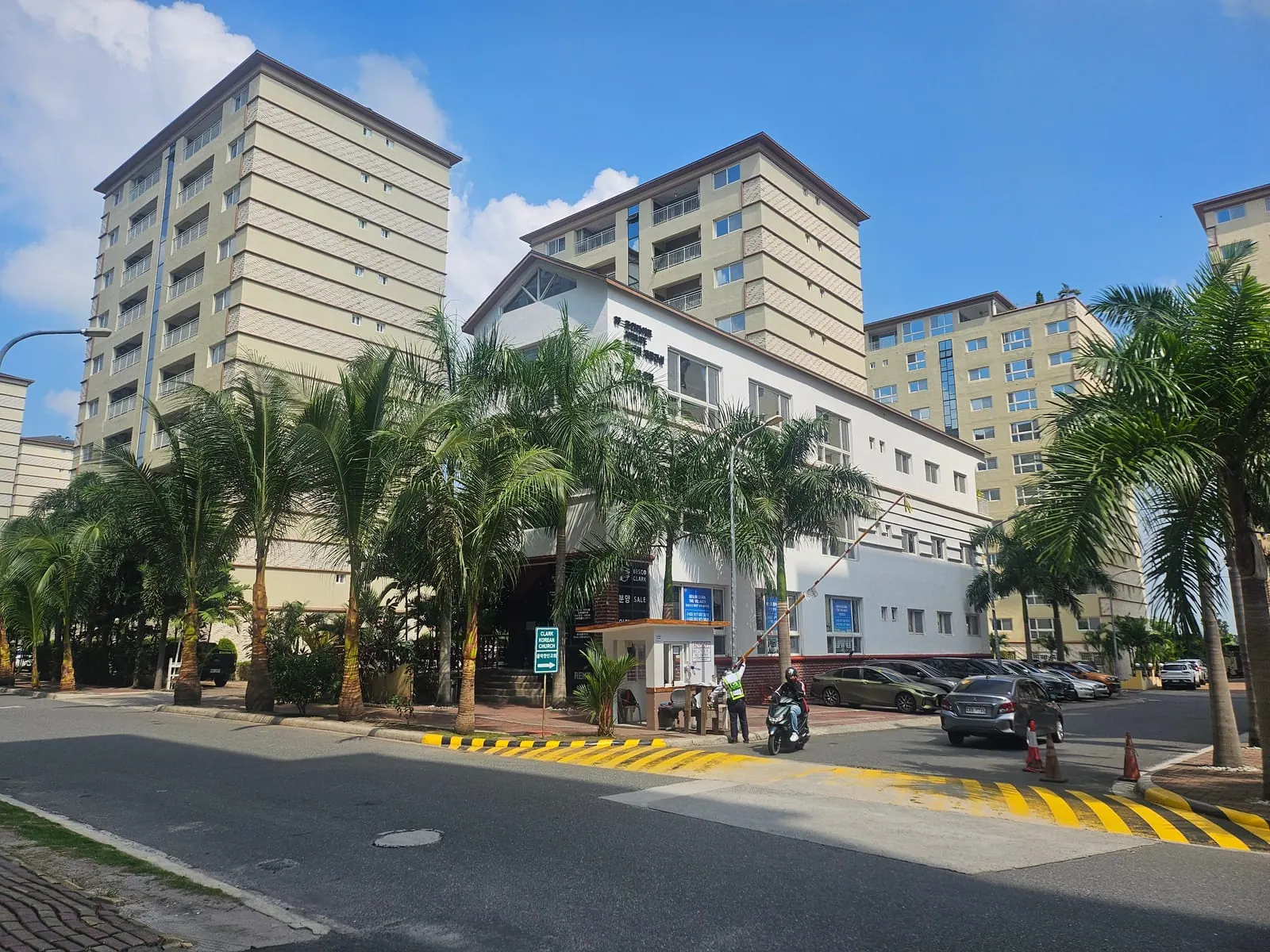
Clark is a former airbase redeveloped into a freeport zone, and what that history produced is a place with wide planned roads, its own international airport a short drive away, and roughly two hours by expressway between you and Manila. If you arrive tired, the transfer is short. If someone needs to visit you, the connection is simple. If you have to leave suddenly, you can.
The zone is quieter and more spread out than a dense city center, with a moderate rather than overwhelming number of schools. Our own campus here opened in September 2023, which is part of a wider pattern: the area has been attracting new construction, which tends to mean newer buildings and newer dormitories than in longer-established hubs. Weekends are a mix of local options and a wide radius of trips — Manila, mountains, and the coast are all reachable, though most involve a couple of hours on the road.
The trade-off runs the other way from Cebu's. There is no beach at the end of the street, and the choice of schools is smaller. Clark suits people who want their study weeks uneventful and their travel deliberate. It suits people looking for constant stimulation less well.
The four questions that actually decide it
Cities are easier to choose when you stop comparing them in the abstract and answer these instead.
- How long is your course? Under four weeks, travel time and transfers matter disproportionately. Over eight, the quality of your weekends starts to matter more than the airport.
- What does heat do to you? Be honest. It determines whether you study after dinner or collapse.
- Do you need fewer options or more? Some people need a place with nothing to do. Others go home early from exactly that place.
- Who else is coming, and when might they visit? Family visits and emergency departures are logistics problems, and the answer is entirely about the airport.
Two more things worth saying, because they cut through a great deal of city marketing. The government fees are identical wherever you study — ₱7,800 per SSP application, ₱4,500 for an ACR I-Card beyond 59 days, ₱3,000–6,000 for each visa extension, at roughly 58 pesos to the dollar. Fees and exchange rates do change, so confirm the current figures with an agency before you pay. And the difference between two schools in one city is routinely larger than the difference between the cities themselves, so once you have narrowed the list, the questions to ask each school will do more for your outcome than any further city research.
In short
Cebu is the right answer if the surroundings are part of what keeps you going and you are willing to choose a school carefully in a crowded market. Baguio is the right answer if you want cool air, a strict timetable and few exits, and you accept a long journey at each end. Clark is the right answer if you want simple logistics, a quiet week and deliberate weekends. None of them is a mistake. Choosing one that contradicts how you actually behave is.
More on narrowing the decision is collected under choose.