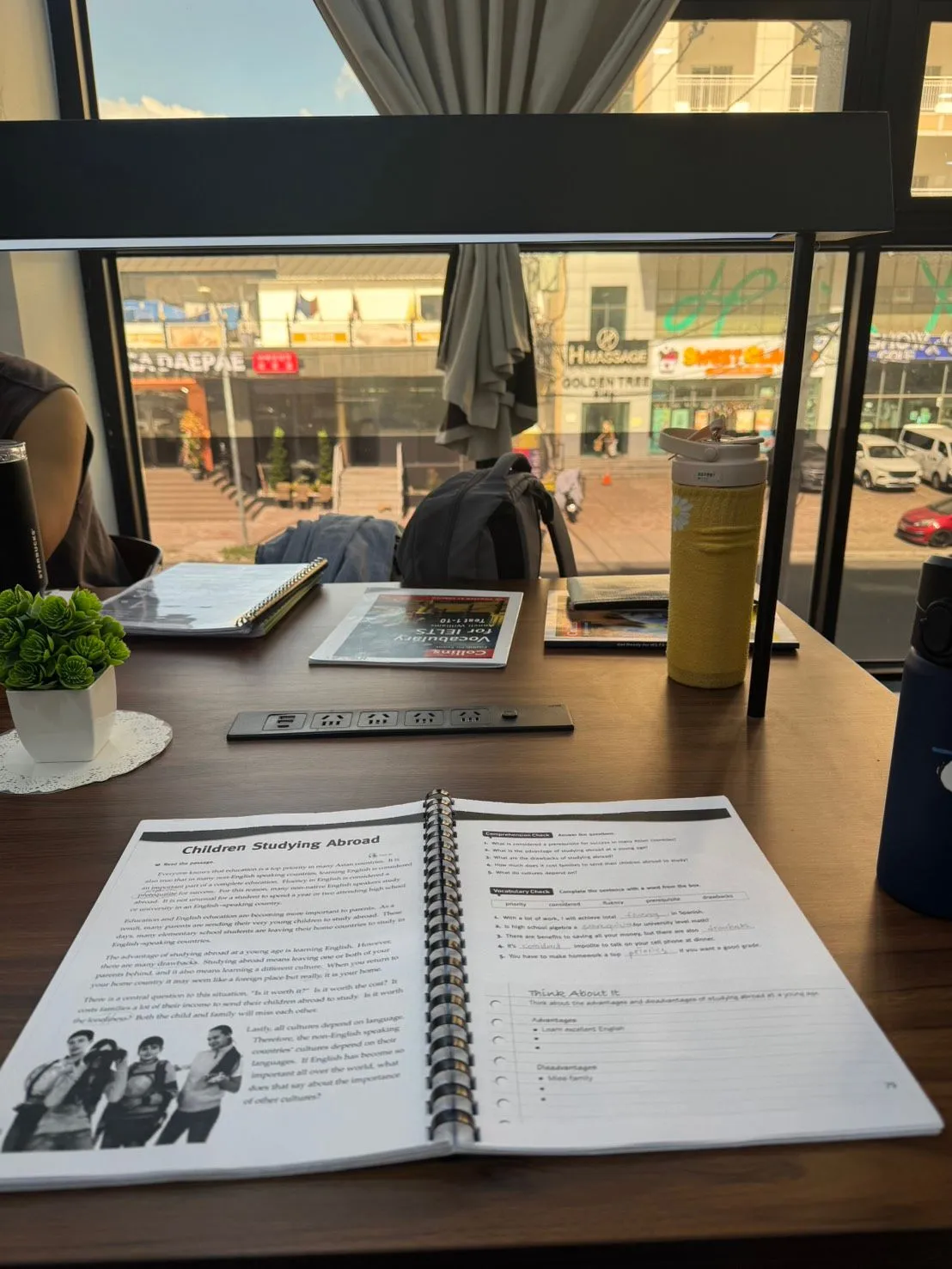
General English vs business English: a student who took both compares them (Sheena, 10-week course)
General English vs business English is the question many people get stuck on before they book: "What's actually different?" At Talk Academy in Clark, Taiwanese student Sheena took the general course for four weeks and then switched to the BUSINESS course for six more. Having done both, she wrote down how they differ. This is her second piece; the first one was written in her second week.
Sheena's 10 weeks at a glance
- Weeks 1–4: TALK4 Hybrid A — four one-to-one classes a day (speaking, reading, grammar, listening) plus two group classes (presentation and debate)
- Weeks 5–10: BUSINESS — six one-to-one classes a day (2 ESL, 2 business, 2 HRM)
- When: September to November 2026, 10 weeks
General English vs business English: what changes
I recently switched from the ESL course to the business English course, and the two focus on slightly different things. ESL is more like the English classes we had at school — it concentrates on basic skills like listening, speaking, reading and writing, and the materials depend on your level. Business English is closer to what you actually need at work, so it suits people who work for an international company now or plan to in the future.
Put simply, ESL builds the foundation; business English puts it to work. In the general course you build the basics evenly, with books matched to your level-test result. The BUSINESS course puts working situations on top of that base.
The words in business English aren't necessarily harder, but there's more emphasis on using them flexibly in work situations — business communication, discussions in meetings, how you express yourself at work. For me it was a different kind of learning experience.
This is the real difference. Business English feels harder not because of the vocabulary but because of the situation. "I agree" is easy; agreeing only in part with a colleague in a meeting, without sounding rude, takes more thought. Even a one-line email needs the right level of politeness. So it's less about a thicker word list and more about practising which words to use, in which situation, and how formally.
The BUSINESS course still includes ESL
One point is easy to misread. Talk Academy's BUSINESS course doesn't drop general English. Its six one-to-one classes a day are 2 ESL, 2 business and 2 HRM — HRM being English for service work such as hotels and restaurants. You keep building the basics while adding work English, which makes it a natural next step after the general course.
Splitting your stay the way Sheena did — general course first, BUSINESS course second — has some advantages:
- You spend the first weeks getting used to the accent and getting the words out (in her first piece, Sheena wrote that the accent took her a little time).
- Once you're speaking more comfortably, you move on to English for work: business communication, discussions in meetings and how you express yourself at work.
- Course fees differ, so if you want to split your stay, plan both parts with your agency when you enrol.
Ten weeks outside the classroom: dance class and an ultralight flight
Besides regular classes, the school has optional classes outside the regular timetable, and I sometimes go to the dance class with friends. It adds some activity to days spent sitting in a classroom, and it's a chance to move and relax.
Talk Academy runs optional evening classes (vocabulary, movies and K-pop dance), with sign-up every Monday. On a day full of one-to-one lessons, some time moving around changes the rhythm.

At the weekend I tried an ultralight flight with friends. Looking down at the scenery from up there was something really new, and a lot of fun. It made me realise that coming to a language school isn't only about learning English — it's also a chance to try things you rarely get to do in everyday life.

The flight was Sheena's own outing with friends, not a school programme. If you'd like to try it, check the operator's information and safety rules yourself.
Weekends: Filipino food and Pilates
At weekends I explore local food and life with friends. We went to a Filipino restaurant and ate dishes our teacher had recommended — food has helped me understand Filipino culture better.

Talk Academy's private dorm rooms (1 to 4 people) include three meals on weekdays (Monday to Friday); there are no meals at weekends or on public holidays. So weekend meals out naturally become a way to explore — and asking your teacher where to eat is good speaking practice too.

There's a Pilates studio near the school, and I sometimes go with a friend at the weekend. It adds some exercise to a week that's mostly classes. Afterwards we have brunch nearby and enjoy a relaxed weekend. I really like this pace of life, with English, exercise and time with friends.
A long weekend in Baguio with friends from different countries
Over a long weekend I travelled to Baguio with friends from school. The bus took about two and a half hours, and it was my first trip with friends from different countries. We all have different cultural backgrounds, but travelling, talking and spending time together actually helped us get to know each other better. It's a very special memory.

A trip with friends from other countries is one long English lesson: finding the way, choosing from a menu and agreeing on plans all happen in English, the language everyone shares. Adult students at Talk Academy have no curfew, but if you'll be away overnight, including on a trip, you need to tell the office.

Ordinary evenings: board games and the café next door
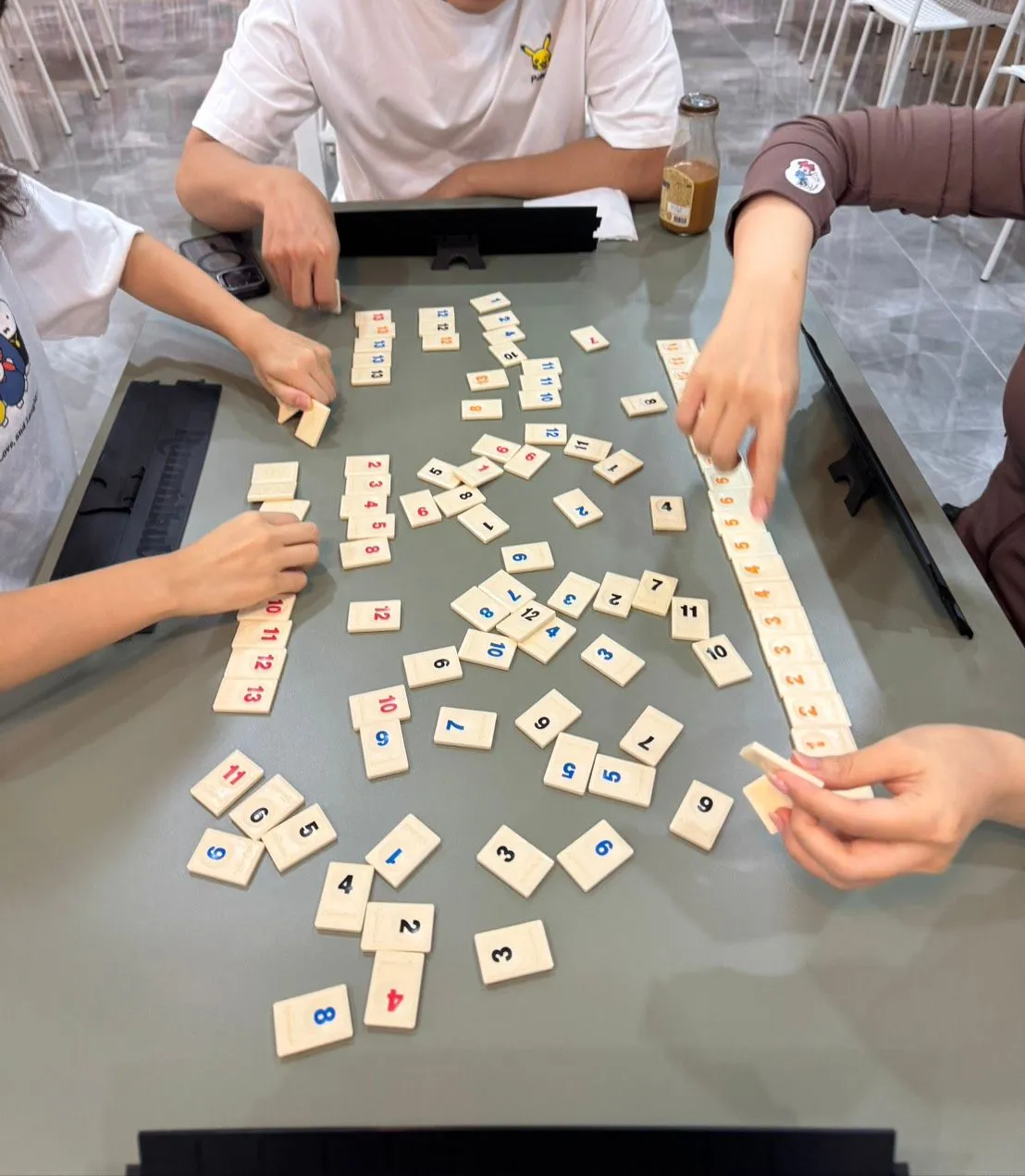
After class there are lots of ways to unwind. Sometimes my friends and I play board games in the canteen, and sometimes I go to the café next to school to read and relax. Every Friday a singer performs at the café, and the atmosphere is lovely.
Talk Academy sits inside The Villages in Clark, where cafés and restaurants are a one-minute walk away. Simply carrying your homework to a café can change a whole day.

How to choose between them
Based on Sheena's comparison:
- The general course (TALK4 or TALK6, or their Hybrid A versions) suits you if you want to build speaking confidence first and strengthen the basics evenly (writing classes are part of TALK6). Hybrid A adds two group classes (presentation and debate, up to 8 students) to the one-to-one lessons, so you also practise speaking in front of others.
- The BUSINESS course suits you if you work for an international company or are preparing for a new job, and you need English for specific work uses such as business communication, discussions in meetings and expressing yourself at work. Two ESL classes remain, so the basics stay covered.
- If you're curious about both, you can split your stay like Sheena did. All classes are taught by Filipino teachers, and each subject has its own specialist teacher.
Coming to a language school has left me with special memories of my time here.
Questions and enrolment
Sheena's first story is how she got used to the Filipino teachers' accent. Read more student reviews. Enrolment, dates and quotes are handled by our partner agencies.