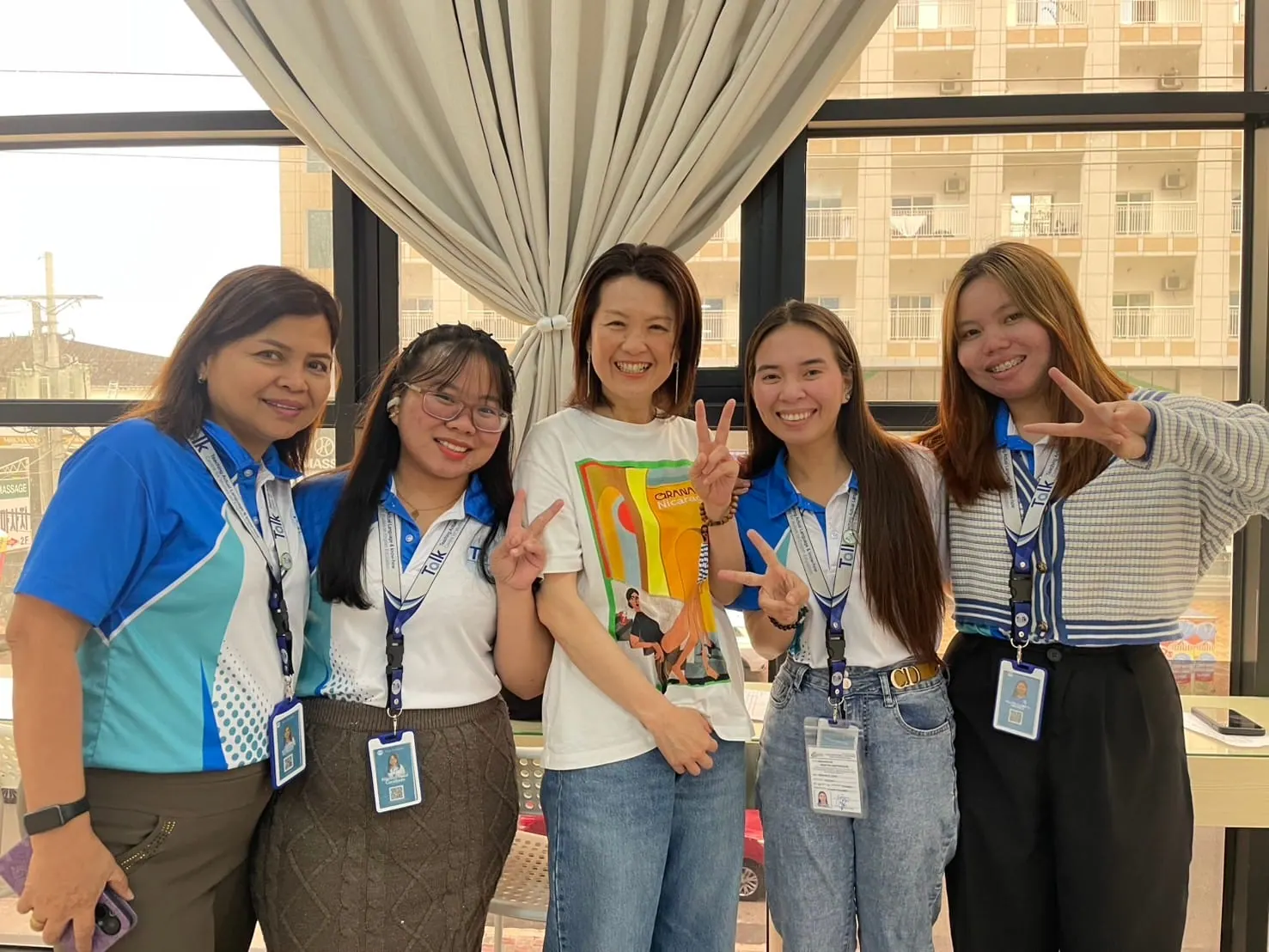
Her First Time Abroad Was Also Her First Time Alone — Momoe's Four Weeks
When people start thinking about studying English abroad, the first question is almost never about English.
"Will I be okay on my own?"
A country you have never lived in. A place where you know nobody. Four weeks. What if you get sick? What about at night? If something goes wrong, who do you even tell? The question of your English level usually has to wait in line behind all of that.
This is the record of someone who started from exactly that place. Momoe Yamada spent four weeks at Talk Academy. It was her first time abroad, and her first time living alone.
What she checked before she left
Before looking at the curriculum, Momoe checked where the school actually was.
Before I left, I researched Clark and found that Talk Academy is inside "The Villages," which is safe. That's why I felt comfortable choosing it.
This deserves a moment. Most people approach safety as a country-level question — *is the Philippines safe?* But what actually affects you is much smaller: what kind of place is the few hundred metres you'll live in for four weeks?
Clark is a freeport economic zone built on the site of the former US Clark Air Base. Its main approach roads have gates where vehicles and people are checked, which makes it structurally different from a city centre that grew organically. Talk Academy sits inside The Villages, a residential area within Clark.
So what she verified was not "the safety of the Philippines" but the structure of the block she would be living in. As a way of choosing a school, that is unusually practical.
And then she went out at night
Reading about a place and living in it are two different things. Here is how she put it:
While I was there, I went out at night with no problems. I felt safe.
One sentence — but for someone still deciding, this is the part that matters. Not the brochure line that says "a safe environment," but what it was actually like for someone who lived there for four weeks and walked outside after dark.
That does not mean anywhere is fine at any hour. At home you choose your times and places too; that is true in every country. But whether you can step out at night within the daily radius of your school and dorm completely changes how a stay feels. Four weeks spent racing a curfew and four weeks where you can go out when you need to are not the same four weeks.
What someone travelling alone actually needs
Brochures like the phrase "full support." They rarely say what it consists of. Momoe's account does.
It was my first time living alone overseas, but the teachers and staff listened and gave me advice from the heart, which was very reassuring.
The staff also supported me with daily life — I could ask them about hospitals and shopping.
Hospitals and shopping. That is what it turns out to be.
Which makes sense. The two hardest parts of falling ill abroad are not knowing which clinic to go to, and not knowing how to describe your symptoms in English. If living alone is new to you, you may not have much experience going to a doctor by yourself even at home. Shopping is the same — where to buy everyday items and what things should cost is knowledge you get fastest from someone who lives there.
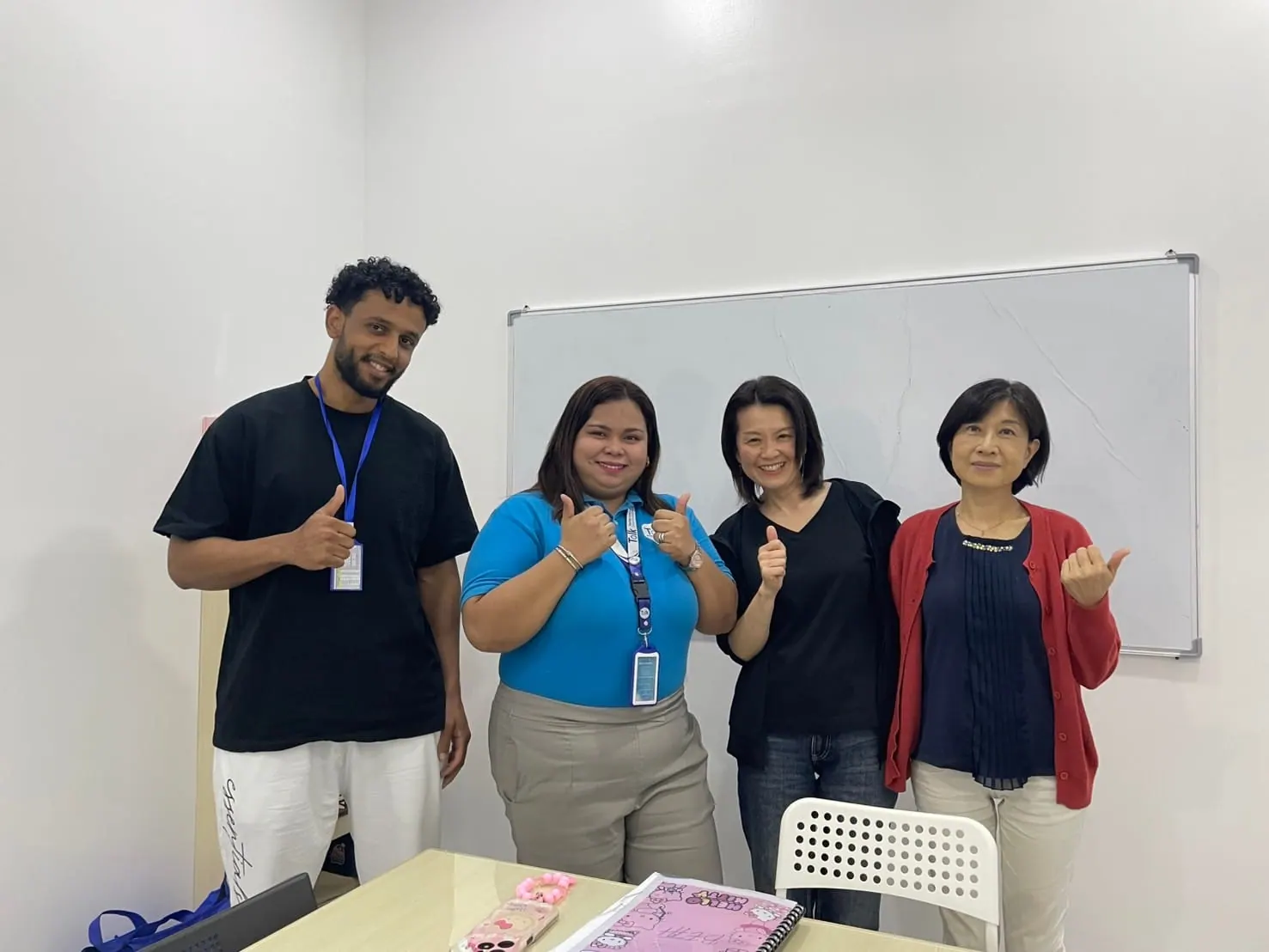
We've written up what actually happens when you get ill in Getting Sick in Clark: Clinics and Pharmacies. Reading it once before you fly takes a lot of the panic out of the moment.
Lessons started with English she could use that day
She also chose her content realistically for a four-week stay.
In class I learned practical things — everyday conversation, travel English — expressions I could use straight away.
Four weeks is too short to rebuild your grammar from the ground up. It is more than long enough, however, to run the loop that matters: learn a phrase in the morning, use it that afternoon. With one-on-one lessons you don't have to follow the textbook's order — you can start with "what I want to say at the supermarket tomorrow."
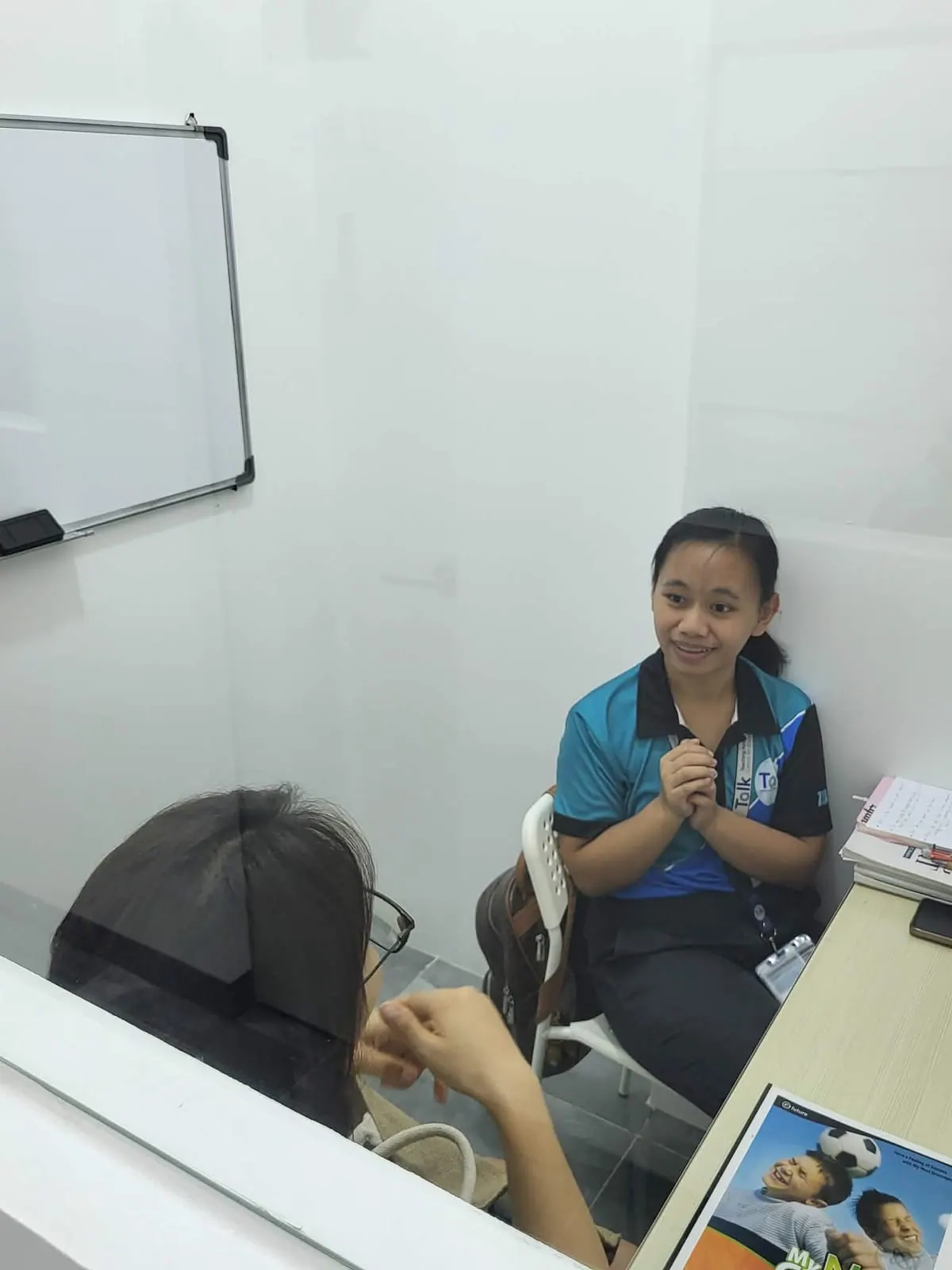
One clarification: Talk's Hybrid course combines one-on-one and group lessons. These are not native-speaker classes. Clark as a district does have a large Western expatriate population, but the teachers who work with students at Talk are Filipino. We'd rather say that plainly than let it be assumed.
After four weeks
Being able to concentrate in an environment where I felt secure is what made my first time studying abroad a success.
That is her own conclusion, and the order of the sentence is the point: feeling secure comes first, concentration follows.
Four weeks carried through with tension and worry, versus four weeks where you can hand the logistics of daily life to someone else — you can sit in the same classes and walk away with different things. What decides whether a stay works may sit outside English altogether.
Five things worth checking before you go alone
Drawn from Momoe's experience. It also works as a comparison checklist when you're weighing up schools.
- What kind of block the school and dorm sit in. Research at the level of the daily radius, not the country. Is access controlled? What's nearby?
- What going out at night is actually like. Not what the rules say — what current students actually do.
- The route when you fall ill. Is there a partner clinic? Does anyone go with you?
- Who handles daily-life questions. The academic contact and the living contact are usually different people.
- Whether there is staff who speak your language. Being able to explain yourself in your own language in an emergency matters far more than you'd expect on a first trip.
Frequently asked questions
Q. Is it really okay to go alone if I've never been abroad?
A. That was exactly Momoe's situation. The point isn't doing everything yourself — it's having someone on campus you can ask. Airport pickup through to dorm check-in is arranged by the school, so you're never navigating an unfamiliar city alone on arrival.
Q. Isn't four weeks too short?
A. It depends on your goal. It is short for systematically rebuilding grammar, but if the goal is losing your hesitation about speaking and actually using everyday English, four weeks produces change. Note that the result Momoe names is not a test score — it's expressions she could use immediately.
Q. Is it safe for a woman travelling alone?
A. Practically, judge it on two things: the structure of the daily radius, and whether there's a system to ask for help. Talk Academy is inside The Villages and the dormitory is on the same grounds, so there's no long journey after dark just to get to class.
Q. Can I enrol if I can't speak English at all?
A. Yes. Classes are organised by level and start from beginner. In fact, a period weighted towards one-on-one lessons is when progress is most visible for someone starting from zero.
Enquiries go through our partner agencies
Enrolment and quotations for Talk Academy are handled by partner agencies in each country. For dates, courses, dormitory types and costs, please contact the agency for your region.
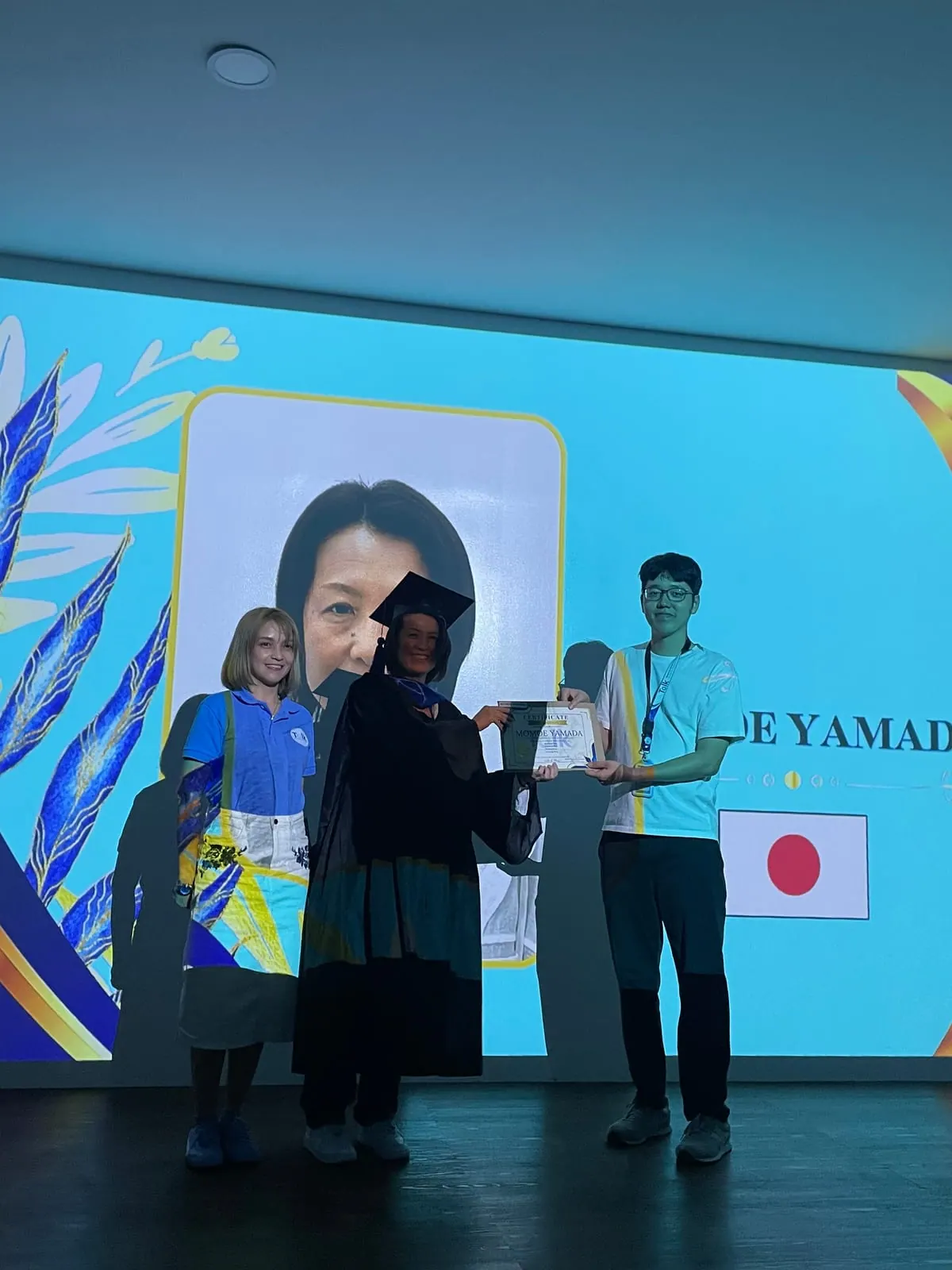
*This article was assembled from the written account and photographs submitted by Momoe Yamada, published with her permission. She completed a four-week course at Talk Academy in 2026.*